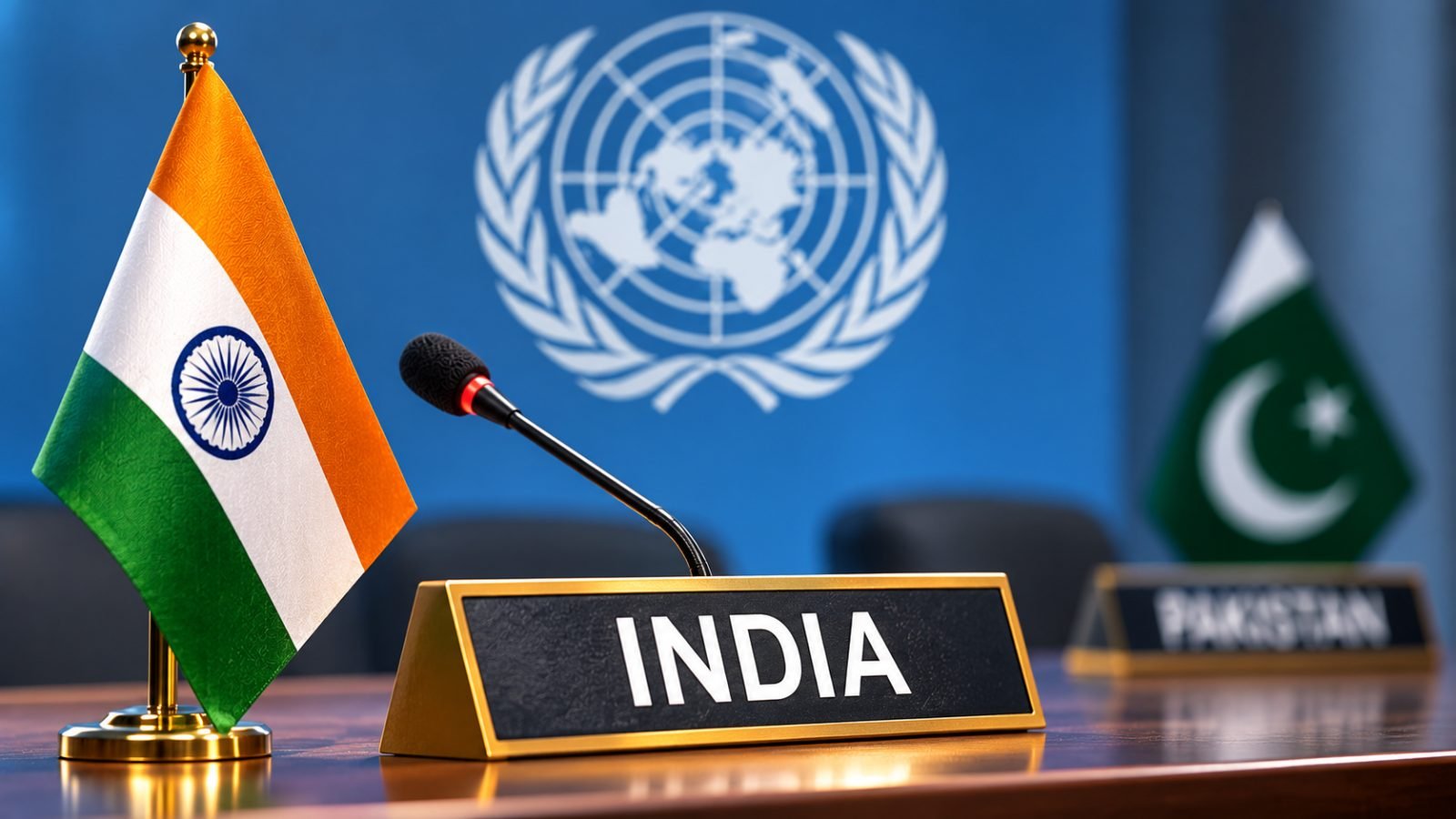
UNITED NATIONS: India rejected Pakistan’s reference to the Indus Waters Treaty at a UN Security Council Arria-formula meeting on natural resources and conflict, saying Islamabad had misused the discussion to peddle propaganda.
India’s Permanent Representative to the UN, Ambassador Parvathaneni Harish, said New Delhi had not intended to raise bilateral issues at the meeting convened by Liberia. He said India responded after Pakistan’s delegation referred to the treaty during the discussion.
At a glance
- Ambassador Parvathaneni Harish spoke at a UN Security Council Arria-formula meeting convened by Liberia.
- India said Pakistan raised the Indus Waters Treaty at a meeting on natural resources and conflict.
- Harish alleged that Pakistan’s military was directly involved in resource extraction for its own benefit.
- India called for voluntary, consensus-based and nationally led cooperation on natural-resource governance.
What happened
The meeting examined the links between natural resources and conflict. Harish thanked Liberia for convening the discussion and said its journey from conflict to recovery gave particular weight to the exchange.
Pakistan referred to the Indus Waters Treaty during the session. Harish said India’s position on the treaty was clear, consistent and had been articulated at multiple fora. He said India had not planned to introduce other matters, but was compelled to respond to Pakistan’s remarks.
Harish criticised Pakistan’s management of natural resources and alleged that its military played a direct role in their extraction. He said the military leadership used the country’s resources for self-enrichment rather than the welfare of its people.
The Indian envoy referred to Pakistan army chief Field Marshal Asim Munir displaying a wooden box containing mineral stones to foreign leaders in September. Harish said this indicated the army’s role in the exploitation of Pakistan’s natural resources.
He also linked the military’s involvement in resource extraction to the dismissal of a provincial government in Pakistan and the imposition of a state of emergency there. These were allegations made by the Indian envoy at the meeting.
Who said what
“It was not our intention to bring other issues into this forum,” Harish said. “But my delegation is compelled to respond to the comment made by the delegation of Pakistan that has chosen to misuse today’s discussion to peddle its propaganda.”
He said Pakistanis would be better served if the country’s “real rulers”, its military, used natural resources for the benefit of the population instead of self-aggrandisement.
Harish also said Pakistan would be better served if its army stopped fomenting conflict for its neighbours, which he said was rebounding on the country itself.
On the wider issue of resource governance, Harish said cooperation worked best when it was voluntary, consensus-based and nationally led, in an atmosphere of friendship and goodwill.
He cited the Kimberley Process as an example of a mechanism that had curbed trade in conflict diamonds while keeping legitimate trade open. The process brings together governments, industry and civil society.
India, which holds the chair of the Kimberley Process in 2026, was committed to strengthening its effectiveness and inclusiveness, Harish said. He said peace could endure only when communities benefited directly from resources extracted from their land.
Background
Arria-formula meetings are informal meetings associated with the UN Security Council. They allow Council members and other participants to discuss issues outside the Council’s formal proceedings.
The meeting focused on the relationship between natural resources and conflict. Harish said governments should use existing mechanisms that prevented illegal trade linked to conflict without disrupting legitimate economic activity.
He referred to India’s mining laws, under which companies are required to support development in local communities. He said such participation and local benefits were necessary for durable peace in areas affected by resource extraction.
What next
Harish said existing and tested mechanisms should be fully used and, where feasible, replicated before countries considered new international frameworks. India said it would work to strengthen the Kimberley Process during its 2026 chairmanship.