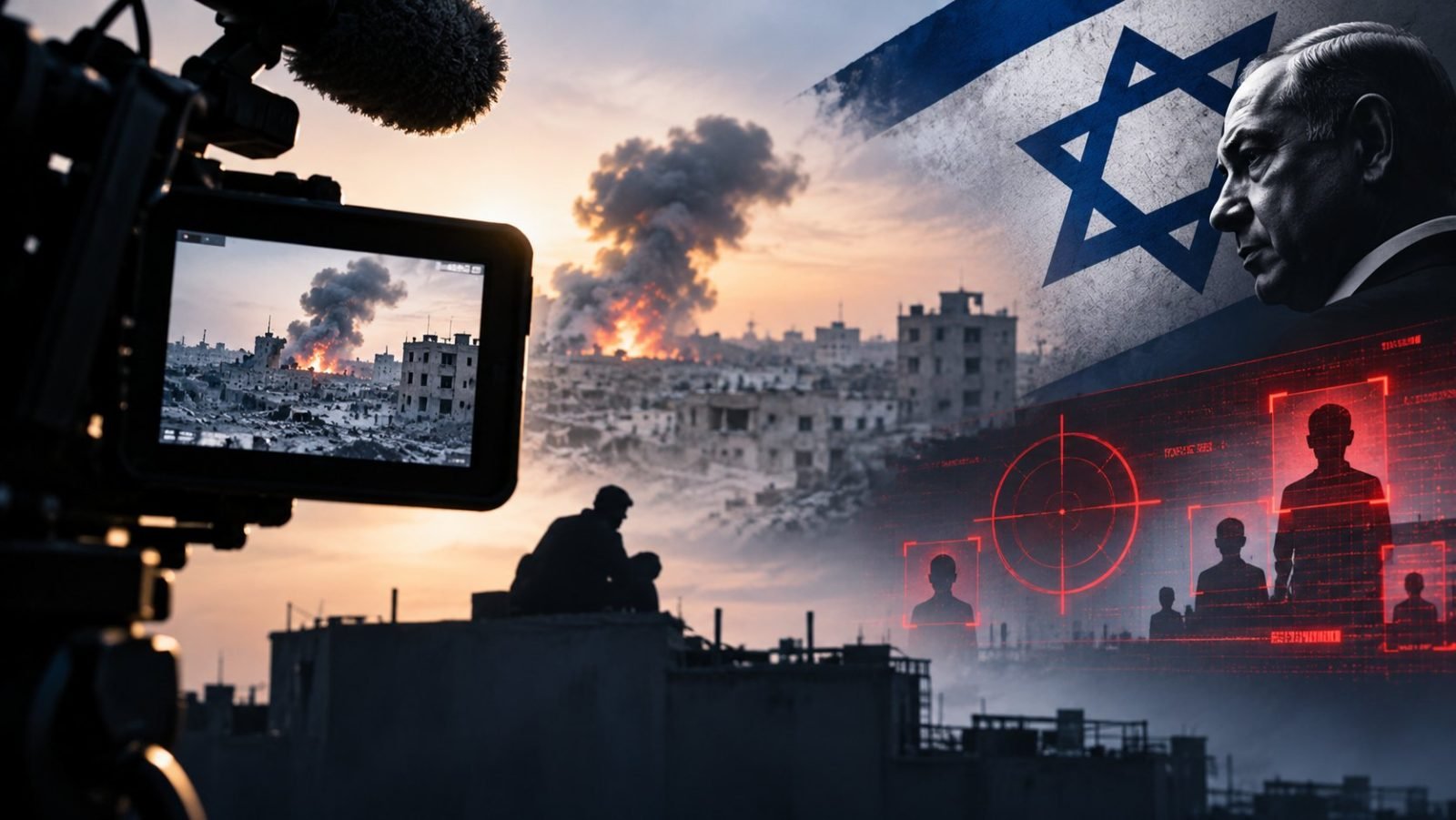
Under the cover of darkness on secluded rooftops in Tel Aviv, two dozen Israeli soldiers and military intelligence officers sat before hidden cameras to speak about what they had done—and witnessed—inside the Gaza war machine. Their faces were digitally obscured; their voices were altered. Yet the Hebrew words they spoke have ignited one of the fiercest political and legal firestorms in Israel in years.
The result of those clandestine interviews is NAZA, an investigative documentary produced by The Guardian and directed by Israeli filmmakers Yuval Abraham and Rachel Szor. As The Guardian explains, the film's stark title comes from an Israeli military acronym used euphemistically to describe civilians expected to be killed during a military strike.
Winner of the special jury prize at the Venice Film Festival, NAZA has defied every expectation for political non-fiction. Screened across 47 countries, the documentary has drawn more than 1.5 million cinema-goers in under two months—including 83,355 viewers in Germany alone—making it one of the most-watched theatrical documentaries of 2026 ahead of its free global streaming release on The Guardian's website in early December, according to The Guardian.
Inside the Investigation: Systemic Command, Not Isolated Acts
To verify the explosive claims made on camera, the filmmaking team interviewed more than 100 sources in total, corroborating on-the-record testimony from 24 Israeli soldiers and intelligence personnel who operated military surveillance networks and remote targeting tools during the Gaza offensive.
Unlike official military narratives that frame civilian tragedies as isolated misconduct, the interviewees describe systemic command structures and rules of engagement driven by artificial intelligence. According to The Guardian, the soldiers recount how AI-assisted systems were used to generate vast lists of suspected Hamas operatives—who were subsequently targeted inside their family homes at night with foreknowledge of civilian deaths.
"Rarely does a film screening give way to such silence when the lights come back on."
— Radio France review of NAZA, quoted in The Guardian
Because the film is told in Hebrew by Israeli directors drawing directly on conscripts and veterans, it has struck a raw domestic nerve that English-language international reporting rarely reaches. Even so, despite being offered to Israeli distributors and cinemas, NAZA has not yet been publicly screened inside Israel.
State Crackdown, Shin Bet Orders, and Street Harassment
Rather than engaging with the testimony, Israel's political and security leadership moved swiftly to retaliate. As documented by The Guardian on October 12 and November 12:
- Order to Unmask Whistleblowers: Prime Minister Benjamin Netanyahu directed Israel's attorney general and the head of the Shin Bet domestic security service to identify the documentary's anonymous military interviewees and prosecute them for allegedly causing "harm to Israel's diplomatic and security interests."
- Treason Accusations & Citizenship Threats: Netanyahu publicly accused directors Yuval Abraham and Rachel Szor of treason and threatened to strip them of their Israeli citizenship, alongside pushes for harsher penalties targeting critical filmmakers.
- Protests Outside Family Homes: Legal inquiries have been initiated against veterans who spoke out. Meanwhile, graffiti branding the filmmakers "traitors" surfaced in Ashdod, and far-right demonstrators picketed Szor's family home—including a protester calling for the "death penalty for traitors."
The India Angle: Battlefield AI Ethics and Defense-Tech Ties
The revelations in NAZA arrive at a pivotal moment for India–Israel security cooperation. Bilateral defense ties between New Delhi and Tel Aviv are rapidly evolving from traditional hardware purchases into deeper industrial co-production and battlefield technology integration. In mid-November 2026, Israeli military-linked optics, sensor, and robotics firms—including Dagan-Optics, Netzer Precision, and Ruby AI—visited India for technology summits, drawing pushback from Indian digital-rights and civil-society groups wary of surveillance deployment.
As Indian strategic planners modernize military AI, drone, and surveillance doctrine for border deterrence, NAZA's imminent free online release presents policymakers, legal scholars, and citizens with a stark real-world case study: where to draw binding human-oversight guardrails in algorithmic warfare, and how democracies balance national-security secrecy against whistleblower protection and documentary press freedom.
Official Response & Press-Freedom Defense
Israel's military establishment fiercely rejected the documentary. Military Chief of Staff Eyal Zamir vowed that the armed forces would "not allow soldiers to be made targets through lies and blood libels" and pledged to use "every tool at our disposal" against the film. In its formal rebuttal cited by The Guardian, the Israeli military stated that NAZA contained "substantial errors" and relied on sources with only a partial understanding of strike-approval protocols—insisting that while AI assisted in identifying targets, human officers always signed off on final strike authorizations and civilian-risk assessments.
Defending the public-interest investigation, statements published in The Guardian condemned the state backlash as "attempts to distract from the urgent questions the film asks about the mass killings of Palestinian civilians in Gaza. Journalists should be free to pursue public interest investigations without threats or harassment."
Source Credits & Verification: Original reporting by The Guardian (Global Box Office & Reception), The Guardian (Explainer, AI Claims & IDF Rebuttal), and The Guardian (Netanyahu Prosecution Order).