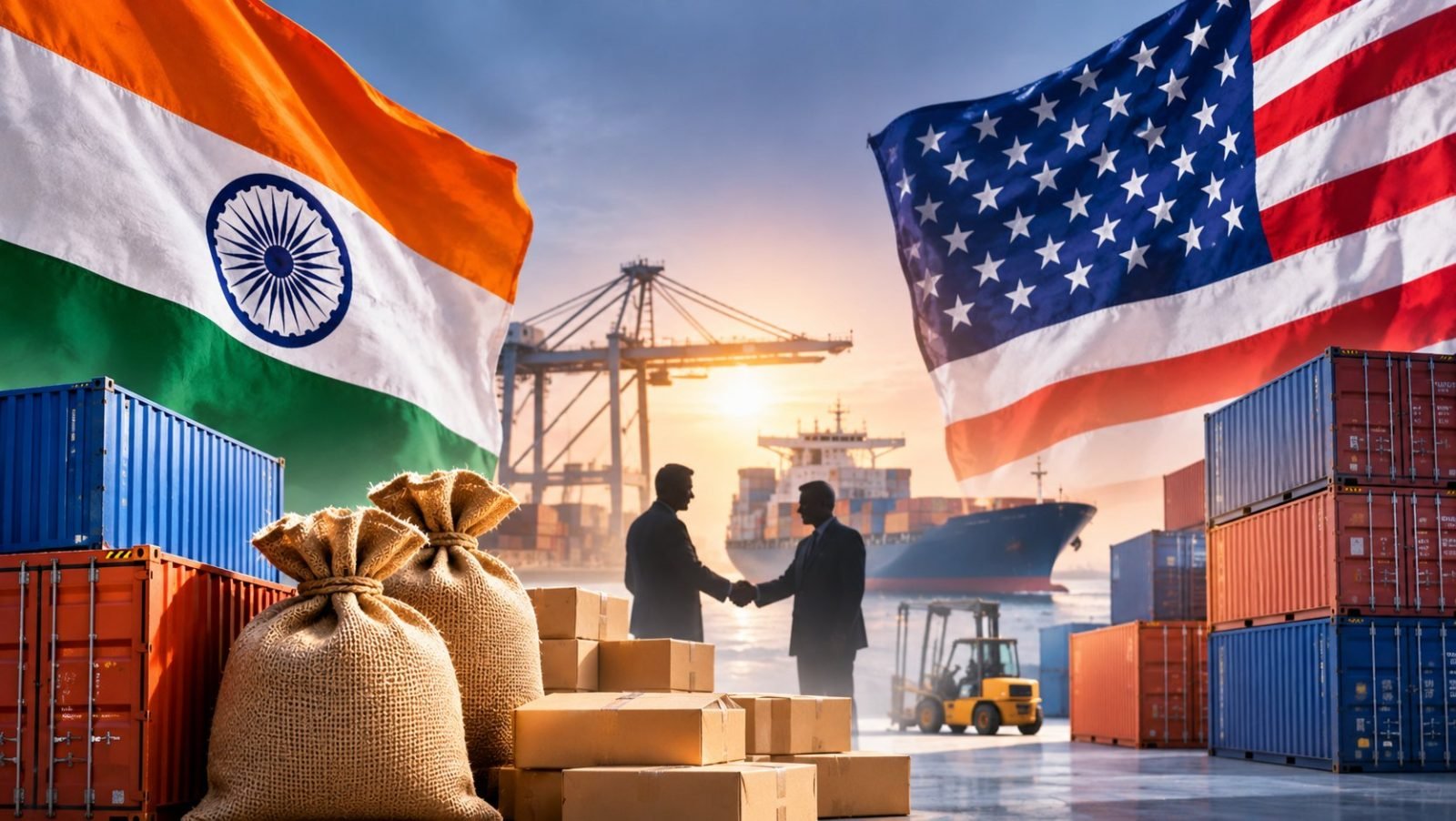
NEW DELHI: The United States proposed an additional tariff of up to 25 per cent on Indian goods following an investigation into alleged structural excess capacity in manufacturing. It said the rate could be reduced to 17 per cent if India concluded a reciprocal trade agreement with Washington.
India rejected the allegation that it had structural overcapacity in any sector. It said trade-related concerns should be addressed through the ongoing bilateral trade negotiations.
At a glance
- The proposed additional duty could be up to 25 per cent on Indian goods, subject to exemptions for certain products.
- The US proposed a 17 per cent rate if India reached a reciprocal trade agreement with it.
- India said it had participated constructively in the US investigation and was examining the notice.
- Public comments and requests to appear at hearings are due by January 5, 2027.
What happened
The Office of the United States Trade Representative issued a notice after completing an investigation under Section 301 of the Trade Act of 1974 into the acts, policies and practices of 14 economies, including India.
The US alleged that the economies supported domestic industries through financial and policy measures, leading manufacturers to produce more than their domestic markets could absorb. It said the surplus was sold at low prices in overseas markets, putting American companies at a disadvantage.
Section 301 empowers the USTR to investigate foreign government acts, policies or practices that it considers unjustifiable and burdensome or restrictive to US commerce.
For India, the investigation flagged potential excess capacity or export surpluses in seven manufacturing sectors: solar modules, petrochemicals, steel, textiles, health-related goods, construction materials and automotive products.
The proposed action would impose tariffs of up to 25 per cent on all Indian goods, net of existing Section 301 tariffs, with exemptions for certain goods. The USTR said it would consider adjusting the duty to account for tariffs imposed under other Section 301 and Section 232 actions.
The proposed tariff has not taken effect. The USTR is seeking public comments before deciding on further action.
Who said what
The commerce and industry ministry said India did not have structural overcapacity in any sector and had engaged constructively throughout the investigation. It said the USTR notice was under examination.
“India and the United States are engaged in negotiations for a Bilateral Trade Agreement. It has been India’s position that any trade-related concerns should be addressed within the framework of these negotiations,” the ministry said.
The ministry said the government remained committed to working with the US for an early conclusion of the India-US Bilateral Trade Agreement. The agreement was announced on February 2, 2026, in line with a joint statement issued on February 7, 2026.
The USTR said a tariff of up to 25 per cent, net of existing Section 301 tariffs, could help secure the elimination of the practices identified in the investigation. It said a 17 per cent rate could be considered if India reached an agreement on reciprocal trade with the US.
Ajay Srivastava, founder of the Global Trade Research Initiative, said the proposed 17 per cent rate would give India only a one percentage point advantage over Bangladesh, Cambodia, Indonesia, Malaysia and Thailand, which faced an 18 per cent rate under a deal. India would have a three percentage point advantage over Vietnam and China, which faced a 20 per cent rate, he said.
Srivastava said the proposed duty would be over and above the usual most-favoured-nation tariff on Indian goods, while taking account of the 10 per cent punitive tariff imposed after a separate Section 301 investigation into alleged forced labour in exported products.
Economist Biswajit Dhar questioned whether a trade agreement would ensure certainty if the US later raised the additional tariff. Countries entered trade agreements to secure predictability and transparency in the trade regime, he said.
Background
The US was India’s largest export market, receiving goods worth more than $87 billion in the financial year ended March 2026. This accounted for about one-fifth of India’s total merchandise exports in FY26.
Indian exports already faced an uneven US tariff structure. About 55 per cent of shipments, including engineering goods, textiles and garments, and gems and jewellery, attracted most-favoured-nation duties along with the 10 per cent punitive tariff.
US duties on textiles and garments could reach 32 per cent. Duties on most gems and jewellery ranged from 5.5 per cent to 6 per cent.
Another 35 to 40 per cent of goods, including smartphones, pharmaceuticals and certain farm products, were exempt from the levy. Steel and aluminium exports faced a tariff of 50 per cent.
What next
Interested parties must submit public comments, requests to appear at hearings and summaries of proposed testimony by January 5, 2027. The USTR has scheduled hearings on the proposed action for January 25, 2027. Further sittings will continue as required.