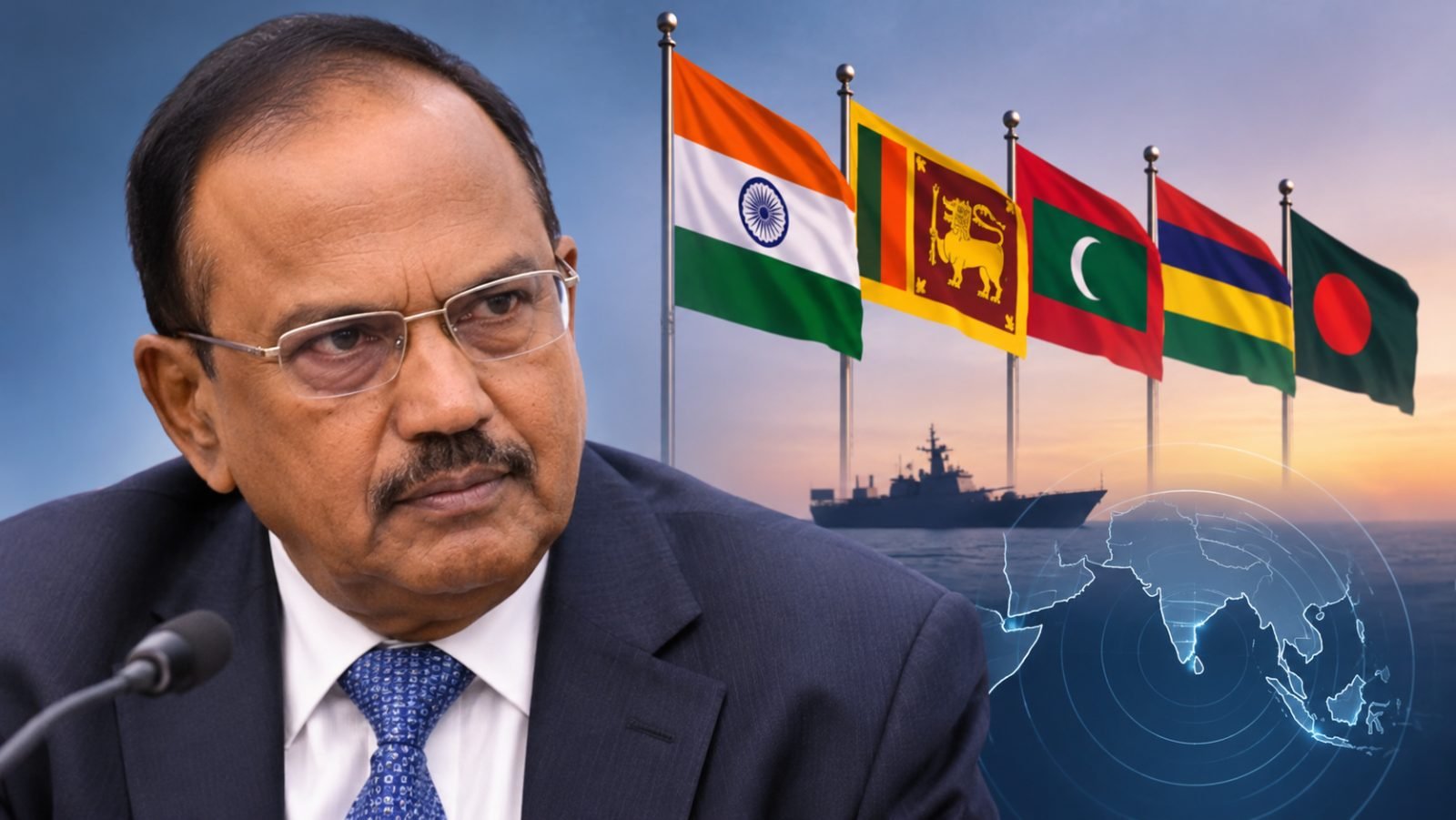
MALE, Nov 25: National Security Advisor Ajit Doval on Wednesday called on Indian Ocean littoral states to deepen strategic cooperation and build collective capacity to counter evolving security threats. Addressing the eighth Colombo Security Conclave, he said the seas should connect nations rather than divide them.
Doval said India would continue to work closely with the grouping's member states and extend necessary assistance to meet their common security objectives.
At a glance
- The Colombo Security Conclave comprises India, Bangladesh, the Maldives, Mauritius, Sri Lanka and Seychelles.
- The eighth meeting of the CSC Council of National Security Advisers was held in the Maldives from November 24 to 26.
- Cooperation under the grouping covers maritime safety and security, counter-terrorism, transnational organised crime, cyber security, critical infrastructure and disaster relief.
- The member states adopted the CSC Charter and signed an agreement on setting up its secretariat in August 2024.
What happened
Doval addressed the National Security Advisers' meeting of the Colombo Security Conclave in Male. He said Indian Ocean littoral states shared a maritime space and civilisational links forged over a long period.
He urged the participating countries to preserve the historic role of the seas as a link between communities and nations for future generations. The Indian Ocean was vital for national security, economic prosperity and the welfare of people in the region, he said.
Doval said the conclave had developed from an initial idea centred on the strategic importance of the Indian Ocean into a structured regional platform. It now had a secretariat and a Secretary General, and members should carry its work forward in the coming months, he said.
On Tuesday, Doval met Maldives Minister of Defence and National Service Hassan Rasheed on the sidelines of the meeting. They discussed ways to strengthen bilateral defence and security cooperation and exchanged views on matters of mutual interest.
Who said what
Doval said the Colombo Security Conclave was at the intersection of India's Neighbourhood First outlook and MAHASAGAR, or Mutual and Holistic Advancement for Security and Growth Across Regions. India remained committed to working with CSC countries to strengthen collective capacities against serious and changing security challenges, he said.
India had worked closely with Sri Lanka, the Maldives and other countries, and wanted this cooperation to expand further, he said. As one of the countries that initiated the conclave, India would give its best and extend all necessary help and assistance, he added.
Doval said he was confident the grouping would become an effective platform for collective security and the protection of common interests in the Indian Ocean region. He thanked the Maldives government and its National Security Adviser for hosting the meeting and making the arrangements.
The members had made progress since the grouping's creation but still had a long journey ahead in meeting their shared goals of safety, security and stability in the Indian Ocean, he said.
Background
The Colombo Security Conclave was established in 2020 after India, Sri Lanka and the Maldives agreed to expand the scope and membership of their trilateral meeting on maritime cooperation. The grouping seeks to address transnational threats and other challenges of common concern to its member states.
Member states signed the CSC Charter and a memorandum of understanding to establish the secretariat in Colombo on August 30, 2024. The agreements were aimed at strengthening the grouping's institutional framework.
Prime Minister Narendra Modi announced the MAHASAGAR vision during his visit to Mauritius in March as a framework for India's engagement with the Global South.
What next
The CSC Council of National Security Advisers was to continue its deliberations in the Maldives, with participating countries discussing regional security cooperation in the Indian Ocean.