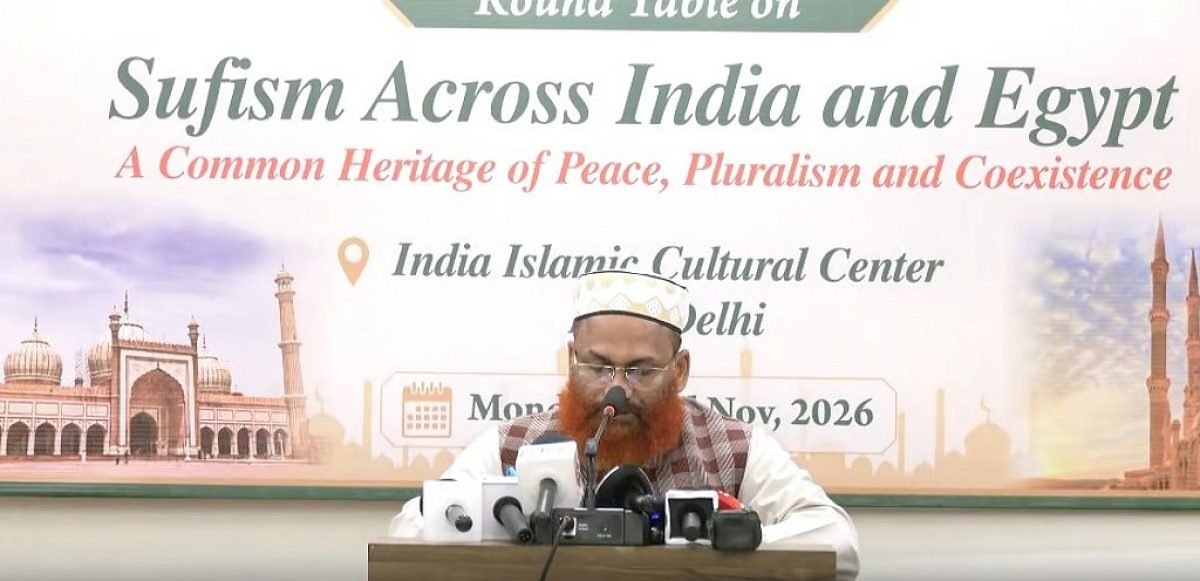
Experts at an India-Egypt roundtable in New Delhi said India's Sufi tradition and history of religious coexistence could offer the world a model of moderate, progressive and inclusive Islam.
The roundtable, titled “Sufism in India and Egypt: Shared Heritage of Peace, Pluralism and Coexistence”, was organised by the Indo Islamic Heritage Center at the India Islamic Cultural Centre. Scholars, religious leaders, academics and media representatives attended the event.
Participants discussed the historical and spiritual links between India and Egypt and the role of Sufism in addressing contemporary global challenges. They said India's inclusive spiritual traditions could offer valuable lessons in countering religious extremism, intolerance and ideological polarisation.
Prof Dr Mohammed Abdul Samed Mahanna, professor of international law at Cairo's Al-Azhar University and adviser to the Grand Imam, said Sufism could emerge as a successful ideology in the contemporary world. India's experience in accepting, nurturing and preserving diverse Sufi traditions could present a model of moderate, progressive and inclusive Islam, he said.
Prof Dr Ghulam Yazdani, dean of the Faculty of Law at Jamia Millia Islamia, described India and Egypt as two ancient civilisations with rich intellectual, spiritual and moral traditions. He stressed the need to strengthen intellectual and cultural exchanges between the two countries.
Sajjadanashin Pir Syed Farid Ahmed Nizami of Dargah Hazrat Nizamuddin Auliya said India's history was built on tolerance, love, harmony and peaceful coexistence. Mufti Ghulam Mohammed Qadri, founder and director of Egypt's Imam Ahmed Raza Qadri Institute, highlighted the importance of love, peace and brotherhood in Sufi traditions.
Muslim Students Organisation of India president Dr Shujat Ali Qadri said such platforms were important for promoting India's indigenous Sufi tradition and inclusive religious thought.
The meeting called for taking India's Sufi heritage and its message of peace, pluralism and coexistence to international audiences, while strengthening civilisational ties between India and Egypt.