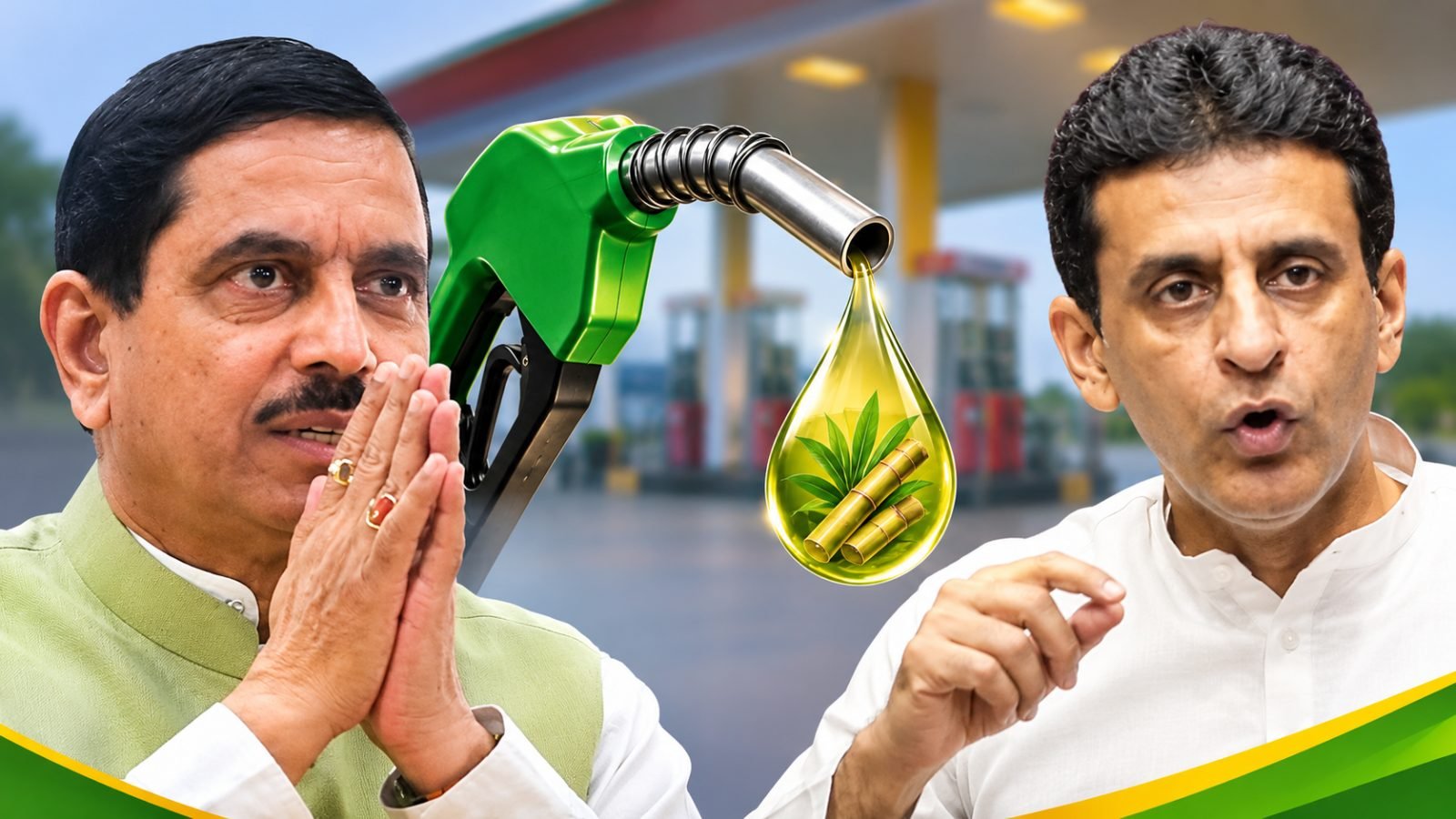
BENGALURU: Union Minister Pralhad Joshi and Karnataka Food, Civil Supplies, Consumer Affairs and Legal Metrology Minister Rizwan Arshad traded charges on Tuesday over the ethanol content of petrol sold in the state and the procedures used to test it.
Joshi accused the Congress of raising the issue to appease party leader Rahul Gandhi. Arshad said Karnataka supported ethanol blending but sought independent verification, transparency and consumer choice.
At a glance
- Joshi said ethanol blending was meant to support farmers and reduce dependence on imported crude oil.
- Arshad alleged that petrol with 26 to 31 per cent ethanol was being sold as E20.
- He sought independent fuel tests and disclosure of ethanol content at petrol pumps.
- Joshi said an oil marketing company officer could join state officials for a joint examination of the issue.
What happened
The row followed Karnataka's claims that some petrol sold as E20 contained a higher proportion of ethanol. Arshad said the state had initially submitted 63 samples to oil marketing companies' in-house laboratories.
He alleged that the reports issued after the tests did not disclose the actual ethanol percentage in the samples. He also questioned the independence of a process in which oil marketing companies tested and certified their own products.
Arshad referred to 893 samples described as compliant across the country, including 56 in Karnataka. He said consumers needed scientific evidence and clear answers, not political allegations.
Joshi questioned Karnataka's testing process. He said petrol and diesel had to be examined with specialised equipment at designated laboratories, and ordinary facilities could not carry out such tests.
He said the system of designated laboratories and specialised testing equipment had been introduced in 2005 under the Petroleum and Diesel Order, during the Congress-led United Progressive Alliance government. One clause required testing at designated laboratories, he said.
Joshi asked the Karnataka government to examine the results provided by the Centre and make the remaining details public. He said sufficient clarification had already been given.
Who said what
Joshi said the Congress had raised concerns over ethanol blending after failing to secure public support for protests over the Special Intensive Revision of electoral rolls, Electronic Voting Machines and other issues. He alleged that the party had taken up the fuel issue to support Gandhi.
He defended the blending policy as a measure to benefit farmers and make India self-reliant. Joshi said crude oil was expensive, while the base price of petrol was Rs 53 and maize-based ethanol cost between Rs 57 and Rs 71. He said the policy was promoted to support farmers and reduce dependence on imported crude oil.
Arshad said Joshi did not hold the petroleum and natural gas portfolio but had spoken on behalf of Union Petroleum Minister Hardeep Singh Puri. In a sarcastic remark, he said Joshi could take over the petroleum portfolio after Puri's resignation.
The Karnataka minister said the Union government should not turn a public-interest issue into a debate between farmers and consumers. Karnataka recognised the benefits of ethanol blending for sugar factories, but people should not be cheated, he said.
Arshad demanded a transparent and independent verification mechanism if the Centre disputed Karnataka's findings. He sought disclosure of the actual ethanol content at petrol pumps and a choice between E10, E20 and pure petrol. Personal attacks could not replace independent accountability or answers to legitimate concerns, he said.
Background
Ethanol is blended with petrol under a government policy aimed at reducing India's dependence on imported crude oil and creating demand for farm-linked production. The policy has been projected as a measure to support farmers.
The immediate dispute centred on Karnataka's claim that samples of petrol marketed as E20 showed ethanol levels ranging from 26 to 31 per cent. The Centre cited 893 compliant samples nationwide, including 56 in Karnataka. The competing claims have not been independently verified.
Why it matters for Assam and the Northeast
The dispute has raised wider questions about fuel quality, consumer information and the testing of ethanol-blended petrol. Arshad's demand for disclosure at petrol pumps and independent checks concerns consumers beyond Karnataka as ethanol blending expands across the country.
Joshi maintained that testing must follow the prescribed procedure at designated laboratories. Arshad said an independent framework was needed to ensure that consumers could verify the fuel they bought.
What next
Joshi said the Centre would send an officer from an oil marketing company if Karnataka wanted a discussion. He proposed that Arshad, state officials and oil marketing company officials sit together to examine the matter, with Arshad acting as the judge.
Arshad maintained that Karnataka wanted transparent testing and public disclosure of ethanol content. The dispute is likely to continue until the two sides agree on a mechanism to verify the samples independently.