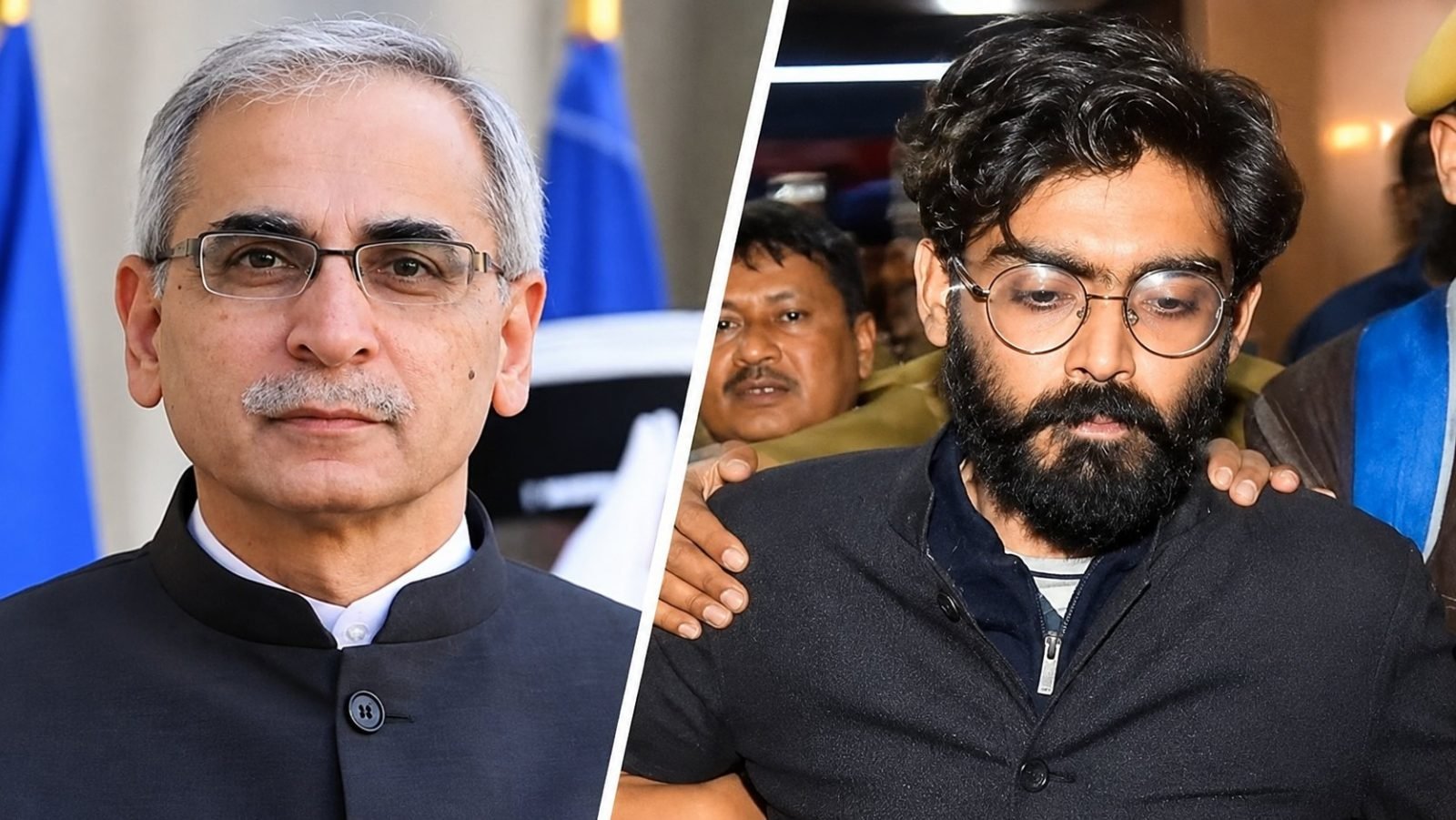
WASHINGTON, Nov 14: Indian Ambassador to the United States Vinay Mohan Kwatra criticised the US Commission on International Religious Freedom (USCIRF) after it posted about jailed activist Sharjeel Imam. Kwatra said the commission had no standing to sit in judgment over the constitutional rights of Indian citizens.
The ambassador responded on X after USCIRF described Imam as a Muslim man detained in India for religious freedom advocacy. Imam faces charges linked to protests against the Citizenship (Amendment) Act and the February 2020 violence in North-East Delhi.
At a glance
- Kwatra said USCIRF's assessments of India were partisan, ill-informed and prejudiced.
- USCIRF was created by an Act of the US Congress in 1998.
- The commission's recommendations are advisory and do not bind the US government.
- Imam was arrested in January 2020 and was later charged in the alleged larger-conspiracy case connected with the North-East Delhi violence.
What happened
USCIRF shared Imam's profile on X, describing him as a Muslim man detained for religious freedom advocacy. Kwatra rejected the description and said the commission could not assess matters governed by India's constitutional framework.
He said USCIRF's comments could not diminish India's commitment to religious freedom and equal rights for all faiths. The ambassador accused the commission of advancing agenda-driven narratives about India.
Imam was arrested in January 2020 in connection with protests against the Citizenship (Amendment) Act in December 2019 and January 2020. Authorities alleged that speeches made by him had incited communal violence.
In August 2020, he was charged in FIR 59/2020, which concerns an alleged larger conspiracy behind the February 2020 North-East Delhi violence. The case invoked provisions of the Indian Penal Code and the Unlawful Activities (Prevention) Act, including those related to rioting, murder, promoting enmity, unlawful activities and alleged terrorist acts.
Who said what
Kwatra said USCIRF had “no locus standi” to judge the constitutional rights of Indian citizens. He said its “habitual partisan, ill-informed, and jaundiced assessments” could not weaken India's constitutional commitment to religious freedom and equal rights for all faiths.
“India flourishes, defying the agenda-driven partisan narratives of the USCIRF,” Kwatra said. “Introspect on your own prejudices and stop lecturing others.”
USCIRF's post presented Imam's detention as linked to his religious freedom advocacy. The material in the post did not elaborate on the criminal allegations against him.
The Ministry of External Affairs had earlier rejected USCIRF's recommendation for targeted sanctions against the Research and Analysis Wing and the Rashtriya Swayamsevak Sangh. Ministry spokesperson Randhir Jaiswal said the commission relied on questionable sources and ideological narratives rather than objective facts.
Background
USCIRF describes itself as an independent, bipartisan entity in the US legislative branch. Its nine commissioners are appointed by the US President and leaders of the Democratic and Republican parties in the House of Representatives and the Senate.
The commission had earlier recommended that India be designated a “country of particular concern”. It also urged the US government to link security assistance and bilateral trade policies towards India to religious freedom concerns. The recommendations have not been binding on the US government.
The February 2020 violence in Delhi took place amid protests against the Citizenship (Amendment) Act, 2019, and the proposed National Register of Citizens. It left 53 people dead and more than 700 injured.
Why it matters for Assam and the Northeast
The exchange concerned India's response to international criticism of its record on religious freedom and equal rights. The material available did not indicate any direct link between USCIRF's post on Imam and Assam or any other state in the Northeast.
USCIRF's recommendations have remained advisory, and have not had a significant role in India-US bilateral relations so far. The latest exchange underlined the Indian government's continuing objection to the commission's assessments.
What next
The alleged larger-conspiracy case involving Imam is being investigated by the Delhi Police Special Cell. The proceedings will continue before the court.
On October 10, a Delhi court declined to entertain a police plea seeking cancellation of Imam's seven-day interim bail. Police had alleged that he violated a condition barring interaction with media persons after footage showed him in a room where a journalist was interviewing his brother. His counsel denied any direct interaction. The court disposed of the application after being told that Imam had left for Delhi to surrender before jail authorities that evening.