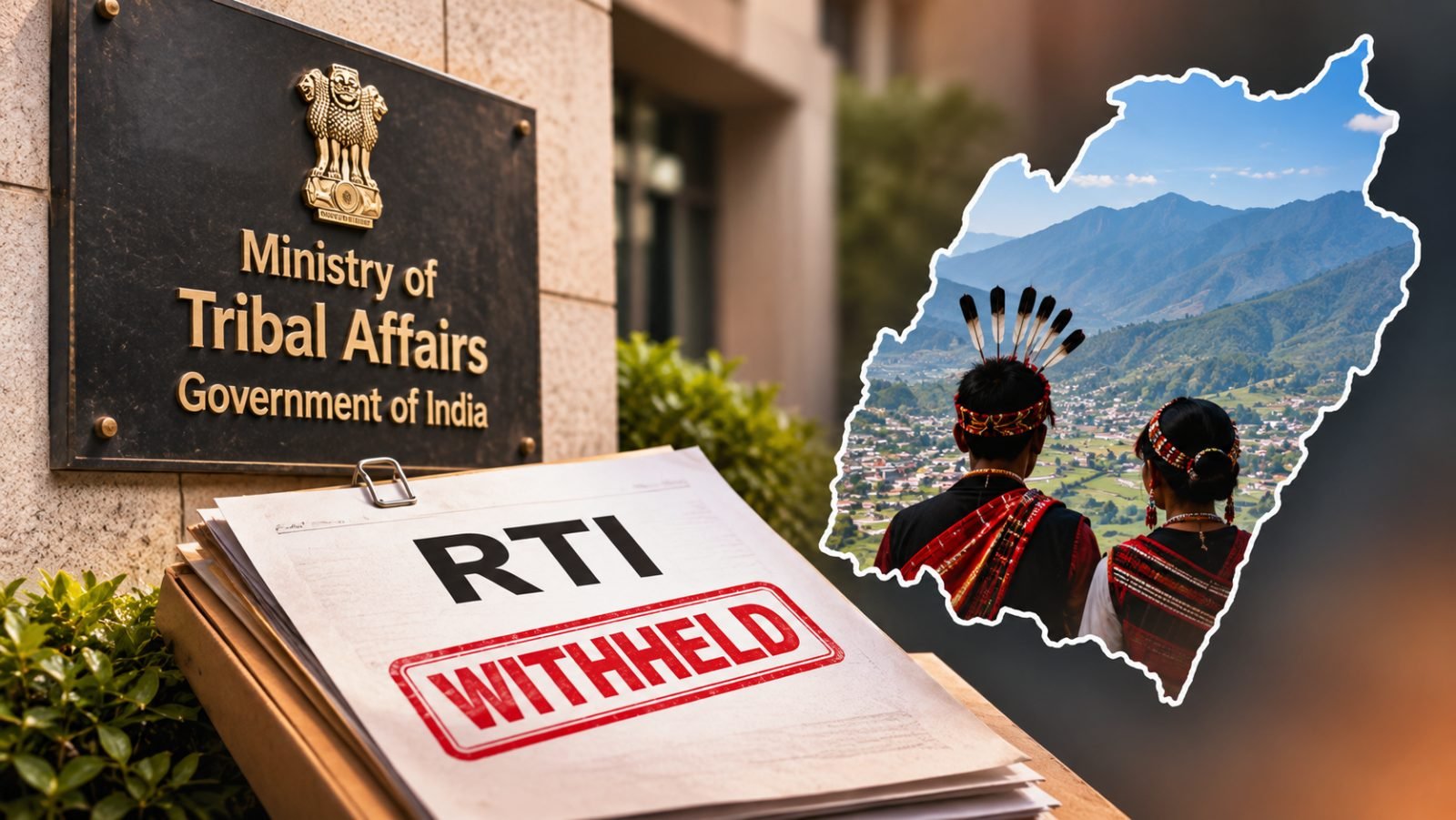
NEW DELHI, Nov 13: The Tribal Affairs Ministry refused to disclose records sought under the Right to Information Act on a claimed Manipur government proposal concerning the state’s Scheduled Tribes list. It said disclosure could aggravate inter-community tensions in Manipur amid ethnic violence and law-and-order concerns.
Information Commissioner Ashutosh Chaturvedi upheld the ministry’s decision. He also rejected the applicant’s plea for redacted copies of the records.
At a glance
- RTI applicant Michael Haokip sought details of a Manipur government letter dated July 25, 2024.
- The letter was claimed to concern deletion of “Any Kuki Tribes” and correction of “Any Mizo (Lushai) Tribe” to “Mizo”.
- The ministry cited risks to public peace, tranquillity and independent decision-making.
- The commission held that the potential harm from disclosure outweighed the public interest in releasing internal material.
What happened
Haokip sought confirmation on whether the ministry had received the proposal, its date of receipt and the official file number assigned to it. He also sought details of action taken and asked whether the matter had been sent to the Registrar General of India and the National Commission for Scheduled Tribes for concurrence.
He sought copies of communications and file notings linked to the proposal, as well as the names and designations of officials who had handled the matter since July 2024.
In its reply dated June 24, 2025, the ministry said it was the nodal ministry for deciding claims relating to inclusion, exclusion and other changes in the Scheduled Tribes list under Article 342 of the Constitution.
It said only proposals recommended and justified by the concerned state government or Union Territory administration could be processed further. Such proposals require concurrence from the Registrar General of India and the National Commission for Scheduled Tribes before they are considered for legislative amendment.
The ministry declined to provide the material while the examination and consultation process was under way. It said disclosure could exert undue pressure on authorities and allow vested interests to interfere with independent decision-making.
Who said what
The ministry said it had seen instances in which disclosure of information on notification of a community had led to violence. It said release of the records in this case could disturb public peace and tranquillity and encourage enmity between communities.
At the hearing, the ministry described the matter as sensitive in view of ethnic violence and prevailing law-and-order concerns in Manipur following developments relating to the Scheduled Tribe status of communities in the state.
Premature disclosure of internal proposals, communications and deliberative records could aggravate inter-community tensions, it said. It added that such disclosure could put pressure on authorities, disturb public order and lead to incitement of offences.
Haokip said the Central Public Information Officer had given a vague reply. He argued that basic administrative details, including the date of receipt, file number and names of officials handling the matter, could not be treated as information held in a fiduciary capacity.
He also said the ministry’s concerns over public order were general and speculative. Chaturvedi, however, said the commission was not persuaded that the public interest in disclosure of substantive internal deliberations and communications outweighed the potential harm identified by the ministry.
Background
The applicant referred to a Manipur government letter dated July 25, 2024. He claimed that it proposed deletion of the nomenclature “Any Kuki Tribes” from the state’s Scheduled Tribes list and correction of “Any Mizo (Lushai) Tribe” to “Mizo”.
The ministry’s procedure requires consultation with the Registrar General of India and the National Commission for Scheduled Tribes on state-backed proposals for changes to the list. Any eventual change requires legislative amendment.
Why it matters for Assam and the Northeast
The order underlined the sensitivity of changes to Scheduled Tribes status and nomenclature in the Northeast. The commission accepted the ministry’s assessment that releasing records related to the claimed Manipur proposal could affect public order and relations between communities.
What next
The commission’s order left the ministry’s refusal intact. The records, including the proposal, related communications and action-taken notings, will not be disclosed, including in redacted form under Section 10 of the RTI Act.