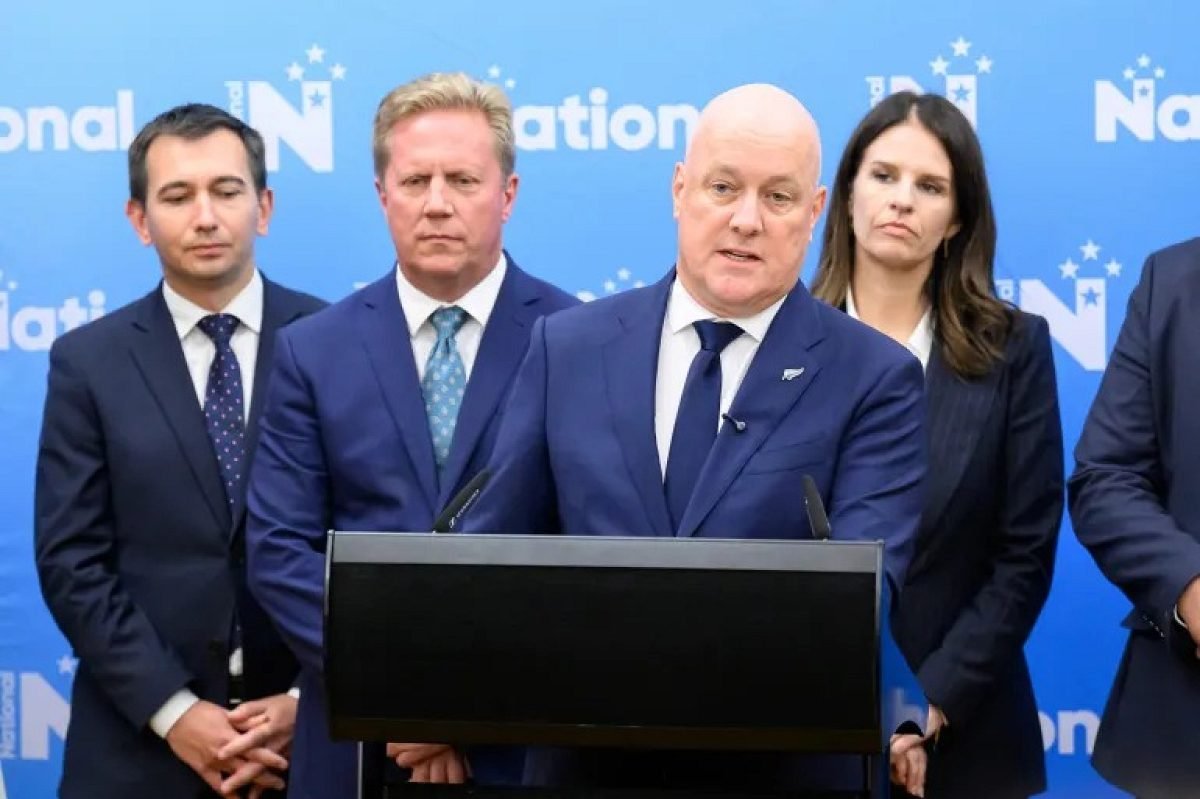
WELLINGTON, Nov 28: New Zealand Prime Minister Christopher Luxon's ruling alliance lost its majority in the final election results, leaving it dependent on support from the centrist Opportunity Party to form a government.
The New Zealand Electoral Commission announced the final results on Friday after counting about 4.85 lakh special votes cast by overseas voters and people voting outside their electorates. The votes changed the outcome in several constituencies.
The National Party's tally fell by two to 40 seats. Labour won 36 seats, followed by the Green Party with 17, ACT Party with 13, New Zealand First with 12, the Opportunity Party with seven and Te Pāti Māori with five.
In the 130-member Parliament, 66 seats are needed to form a government. The alliance of the National Party, New Zealand First and ACT Party has 65 seats, one short of a majority.
Luxon said the National Party would begin formal talks with New Zealand First, ACT and the Opportunity Party on Friday. He indicated that the negotiations would not be easy.
Opportunity Party leader and Auckland businessman Kuelei Wong said the party would not compromise on climate and environmental policy, limits on political donations, a 10-year cross-party health plan, a ban on bottom trawling and stronger climate commitments. Wong said she would speak with Luxon but would not join a government deal if New Zealand First leader Winston Peters was appointed foreign minister.
Special votes helped Labour take Wairarapa and Hamilton East from National, while the Green Party won Wellington Bays from Labour. National can seek a recount by December 3, and a gain of one seat would allow the alliance to secure a majority without the Opportunity Party.
Labour leader Chris Hipkins expressed disappointment that his party, despite receiving the highest party vote, could not bring about a change of government. Talks among four parties could take weeks, as government formation negotiations after the 2023 election took five weeks.