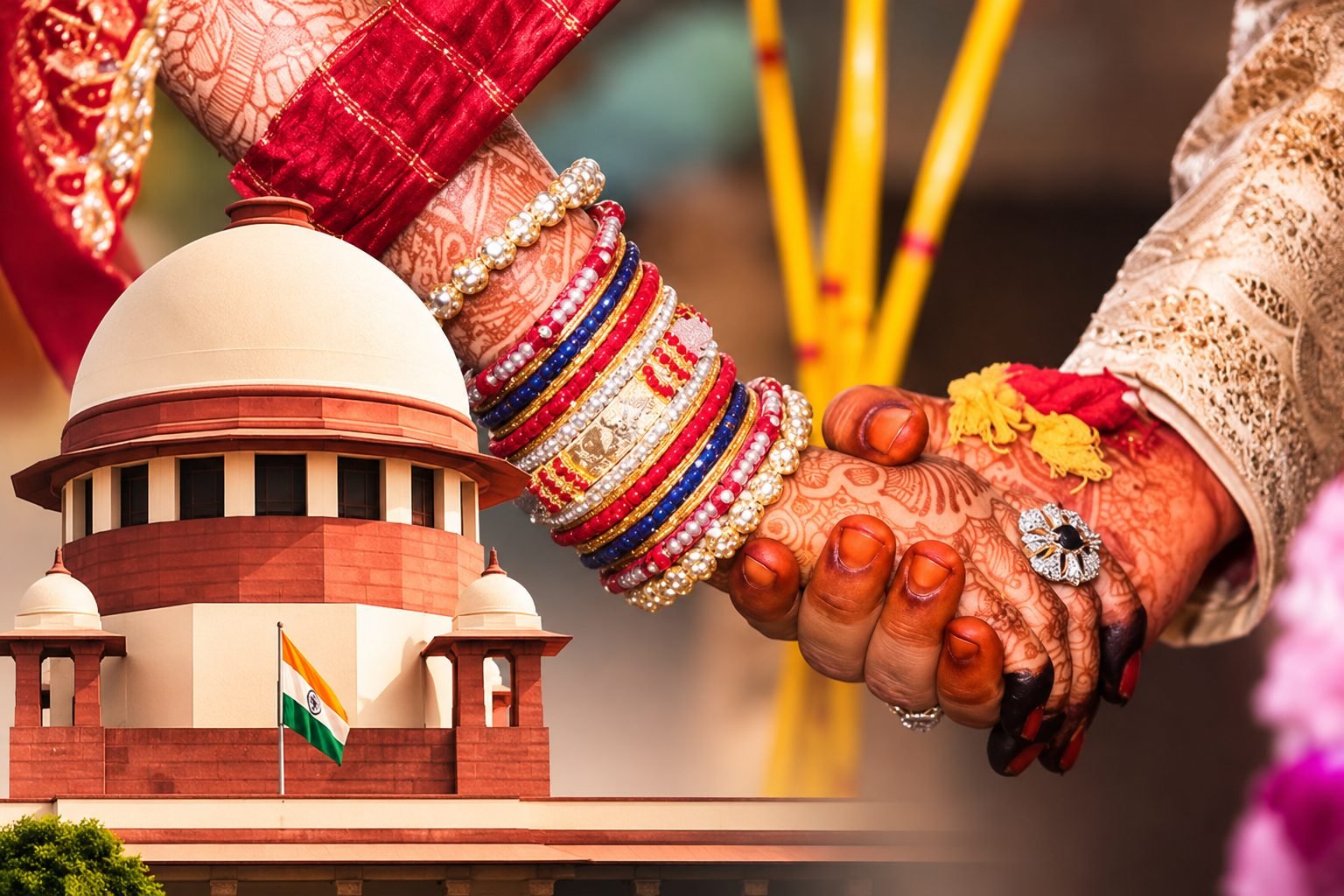
NEW DELHI, Nov 20: The Supreme Court on Friday sought the Centre's response on the desirability of legislation on marriages between people closely related by blood. The court said it would not direct the government to enact a law but would sensitise it to the issue.
A Bench comprising Chief Justice Surya Kant and Justices Joymalya Bagchi and V. Mohana said regulation of such consanguineous marriages fell exclusively within the legislature's domain.
At a glance
- The Supreme Court issued notice to the Union government on the issue.
- The Bench asked the Centre to consider the desirability of suitable legislation.
- It also referred to wider public awareness through different channels, including an appropriate curriculum.
- The court said it could not regulate marriages between people closely related by blood.
What happened
The matter came up on a petition raising concerns over marriages between people who are closely related by blood. The petitioner sought safeguards and wider dissemination of information about the possible adverse consequences of such marriages.
During the hearing, the Bench said any regulation in this area would have to come from the legislature. It said the court could issue notice only for the limited purpose of asking the Union government to consider whether a suitable law was needed.
The Bench said the Centre could also ensure wider publicity through different channels. It indicated that an appropriate curriculum could be one of the means to create awareness.
The court sought the government's response on whether legislative measures, awareness measures or both should be considered.
Who said what
“We are issuing notice for the limited purpose of impressing upon the Union of India to consider the desirability of bringing a suitable legislation, or to ensure wide publicity through different channels, including a proper curriculum,” the Bench said.
It made clear that it would not issue a direction to the Centre. “We will not direct them. We will only sensitise them,” the Bench observed.
Counsel for the petitioner said the issue involved inter-generational equity. The counsel submitted that people should be informed through wide publicity about the adverse consequences associated with such marriages.
The petitioner's counsel also sought safeguards, claiming that the practice of consanguineous marriages was increasing.
Background
Consanguineous marriages are marriages between people related by blood. The petition sought the Supreme Court's intervention to secure preventive safeguards and public awareness on the issue.
The hearing centred on the limits of judicial intervention. The Bench said framing a law or imposing restrictions on such marriages was for the legislature and not for the court.
The court did not issue any direction on the petitioner's request for safeguards. It confined the notice to asking the Centre to consider the need for legislation or awareness measures.
Why it matters for Assam and the Northeast
The issue before the court concerned the scope of legislation and public awareness on marriages between close blood relatives. The hearing did not deal with any Assam- or Northeast-specific aspect.
The Bench's observations underscored that any policy response, including safeguards or awareness programmes, would have to be considered by the government and legislature rather than framed through a judicial order.
What next
The Centre will place its response before the Supreme Court on the desirability of legislation or wider public-awareness measures in relation to marriages between people closely related by blood.
The court will consider the matter after receiving the government's response. It has not directed the Centre to enact a law.