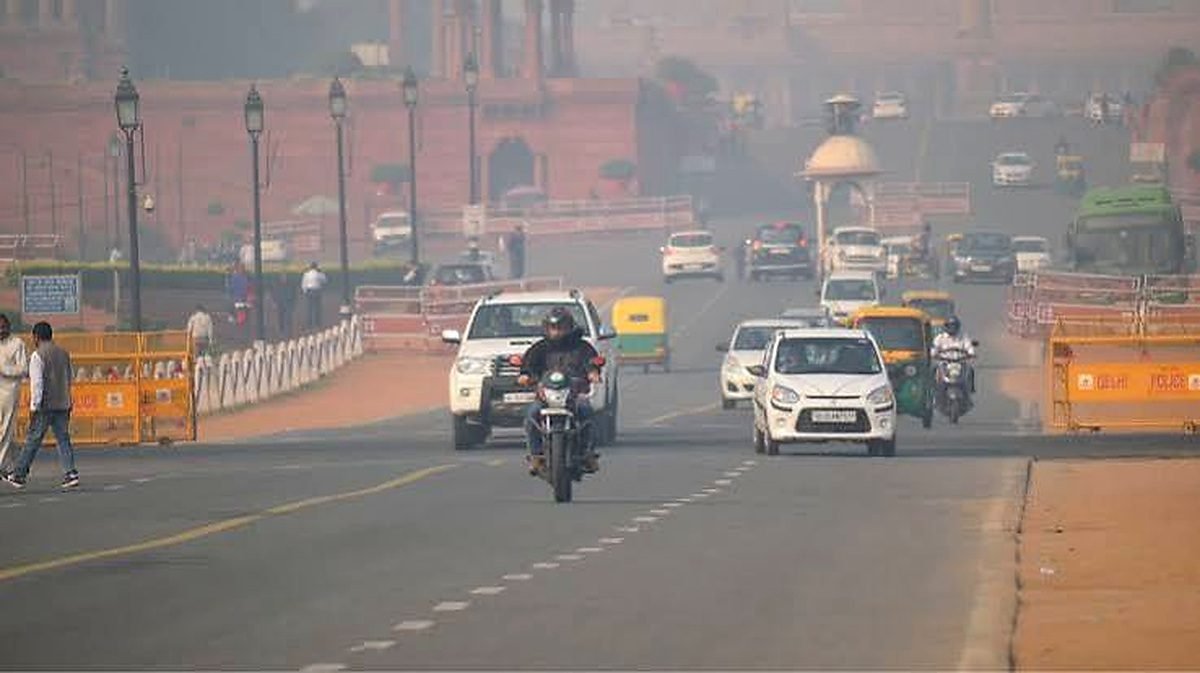
NEW DELHI, Nov 6: The Supreme Court on Friday described vehicular emissions as a major contributor to air pollution in Delhi-NCR and sought detailed plans to curb polluting vehicles and regulate traffic movement. The directions came as a thick layer of smog covered the capital and its overall air quality index (AQI) settled at 391, close to the severe category.
A Bench led by Chief Justice of India Surya Kant said immediate, medium-term and long-term measures were needed as the AQI had touched 400 in parts of the region.
At a glance
- The Supreme Court sought vehicular-pollution action plans from Delhi, Haryana, Uttar Pradesh and Rajasthan.
- The Bench flagged heavy traffic on roads linking Delhi with Ghaziabad, Greater Noida, Gurugram and Faridabad.
- Thirty of Delhi's 59 monitoring stations recorded severe air quality at 9 am.
- Stage III of the Graded Response Action Plan was invoked across NCR.
What happened
The Bench, also comprising Justices Joymalya Bagchi and V. Mohana, was hearing a suo motu matter on the regulatory framework for air pollution. It directed the Delhi government, the Municipal Corporation of Delhi, Delhi Police's traffic department and the Haryana, Uttar Pradesh and Rajasthan governments to submit plans within two weeks.
The plans must cover vehicular movement, emission standards and measures against polluting vehicles. The court sought details of the criteria and procedures used to ensure compliance with emission norms.
It also asked the authorities to explain how rules governing Pollution Under Control (PUC) certificates were being enforced. The Bench sought details of action against old vehicles and those failing to meet prescribed standards, including the number of vehicles checked and challans issued.
Expressing concern over bumper-to-bumper traffic on Delhi-NCR roads, the court noted the high volume of vehicles travelling between Delhi and adjoining urban centres. It identified such traffic as a major problem behind the pollution crisis.
Delhi's AQI settled at 391 on Friday. Rohini recorded an AQI of 475, followed by IIT Delhi at 472. Of the 59 monitoring stations in the city, 30 were in the severe category at 9 am and the remaining stations were rated very poor.
The Commission for Air Quality Management invoked Stage III of the Graded Response Action Plan (GRAP) for NCR ahead of Diwali. The restrictions included a ban on several dust-generating construction and demolition activities and the closure of stone crushers and mining operations across the region.
Stage III also barred BS-III petrol and BS-IV diesel or older four-wheelers in Delhi and the districts of Gurugram, Faridabad, Sonipat, Ghaziabad and Gautam Buddha Nagar. In Delhi, the restrictions covered specified BS-IV and older diesel medium goods vehicles. They also covered the entry of BS-IV and older diesel light and medium goods vehicles registered outside Delhi.
Who said what
“We keep talking and sometimes make statements and suggestions, but the point is that AQI is already touching 400,” the Chief Justice said.
He said the volume of vehicles on roads in Delhi and those connecting the capital with NCR showed the scale of the problem. “Take a look at any road and the kind of vehicles moving on it. That is the major problem,” he said.
The Bench said poor people were the worst affected as they remained on the roads and the festival period was often their only opportunity to earn a livelihood. On stubble burning, it stressed the need to educate farmers about using machines instead of setting crop residue on fire.
Additional Solicitor General Aishwarya Bhati, appearing for the Centre and other authorities, said the regulatory framework covered industrial emissions, vehicular pollution, construction and demolition dust, road dust and stubble burning.
She said the authorities had imposed restrictions on the entry of certain vehicles, introduced geo-tagging of PUC certificates and acted against visibly polluting vehicles on complaints received through applications and social media. Bhati said stubble burning accounted for 14 per cent of Delhi's pollution on November 5.
On a plea seeking closure of schools or hybrid classes for students of all age groups when the AQI crossed a specified level, the Bench said it would be guided by expert opinion.
Background
The revised Stage III plan is a 10-point response framework for Delhi and parts of Haryana, Uttar Pradesh and Rajasthan. It prohibits excavation, piling, demolition, brickwork, road construction, major welding, painting, polishing and the movement of construction material on unpaved roads.
Essential infrastructure projects may continue subject to pollution-control norms. These include railway, metro, airport, hospital, national security, highway, flyover, power transmission, sewage treatment and water-supply projects.
The framework requires hybrid classes up to Class V wherever online teaching is feasible. Students and their guardians may choose online classes. Governments may also consider 50 per cent physical attendance in government, municipal and private offices.
Why it matters for Assam and the Northeast
The court's directions applied to Delhi-NCR and did not specify any measure for Assam or other northeastern states.
What next
The court said it would pass orders after reopening following the Diwali vacation and take up the plea on November 16. The vehicular-pollution matter was separately listed for hearing on November 23.