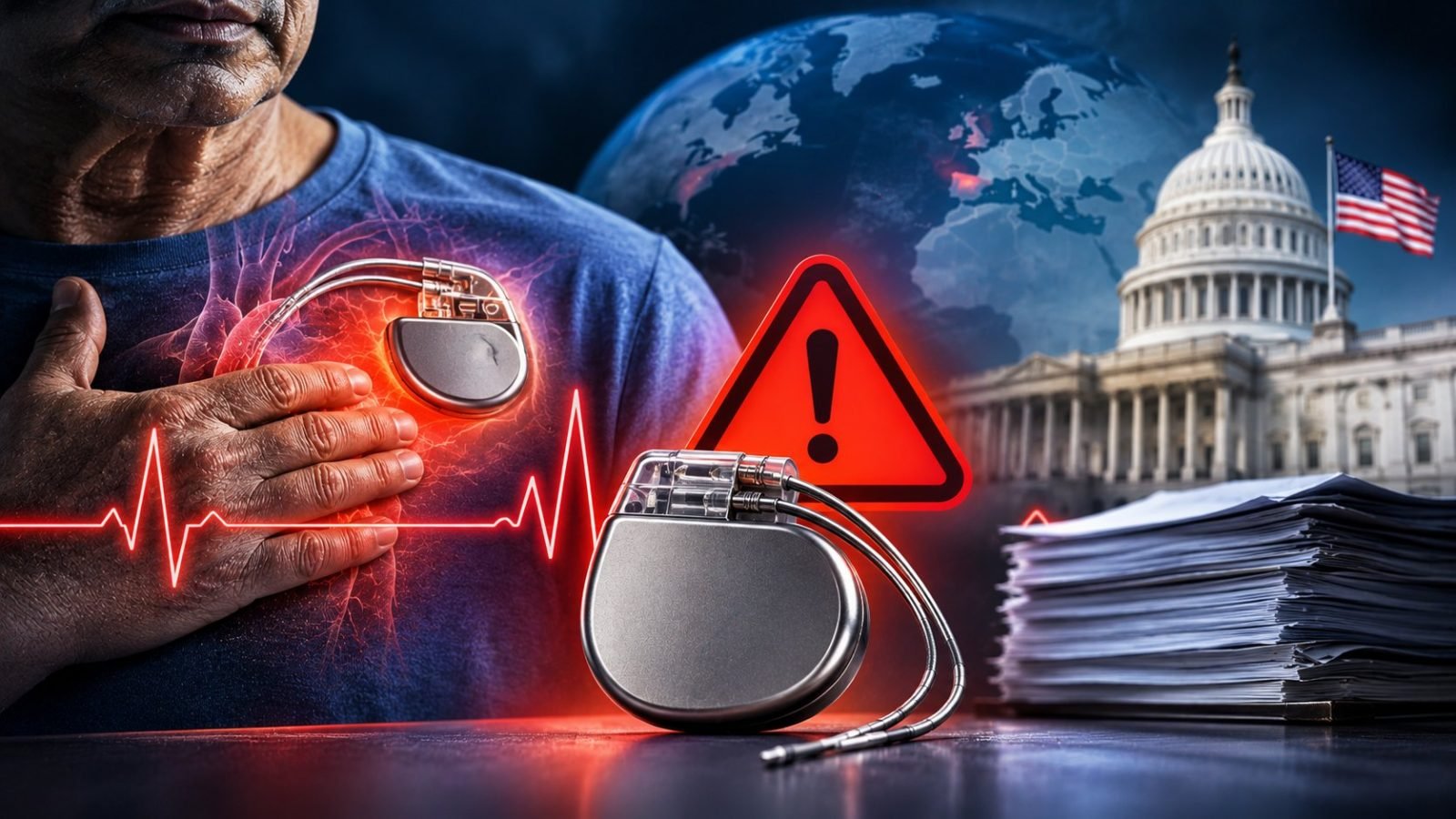
In corporate hospitals from Mumbai and Bengaluru to Guwahati, one reassurance routinely closes the pre-surgery conversation before a heart stent, pacemaker, or joint replacement: "Don't worry—it's U.S. FDA-approved." For millions of Indian families paying out of pocket, that American seal of approval is treated as the gold standard of patient safety.
That confidence has just taken a severe hit. A November 20 investigation by the International Consortium of Investigative Journalists (ICIJ) reveals that medical device manufacturers have actually gotten worse at disclosing when their products malfunction or injure patients—and the U.S. Food and Drug Administration (FDA) let them do it.
Seven Years After the 'Implant Files': How 12,000+ Injuries Vanished
In 2019, following ICIJ's landmark Implant Files investigation, the U.S. FDA shut down a controversial alternative-reporting loophole that had kept millions of severe device failures out of public view. At the time, the agency vowed to end the secrecy "in the spirit of public transparency."
Seven years later, a new study detailed by ICIJ shows that the safety blind spot has quietly opened back up:
- At Least 12,000 Uncounted Adverse Events: Researchers found that the FDA allowed device makers to submit "incomplete, inaccurate, and delayed" safety filings, resulting in an undercount of at least 12,000 patient-harm events.
- Surgeons Operating Without Red Flags: When device-specific failure rates are delayed or obscured, doctors continue implanting potentially defective hardware into new patients. Researchers cited by ICIJ put the question bluntly: "Is restricting access to timely, de-identified, device-specific safety information really in the public interest?"
- A Global Double Standard on Recalls: As ICIJ's broader Implant Files archive has documented—covering cardiac devices, hip implants, contraceptive coils, vaginal mesh, and breast implants—products pulled from shelves in one country over safety alarms frequently stay on the market elsewhere, turning patients from Amsterdam to Mumbai into unwitting test subjects.
Why This Matters Now for Indian Patients and Hospitals
The November 20 disclosure lands at a decisive moment for India's healthcare market. In November 2026, India's Central Drugs Standard Control Organisation (CDSCO) floated draft rule amendments to expand authorized import entry points for drugs, medical devices, and cosmetics. Across India's private and tertiary hospitals, imported cardiac stents, pacemakers, orthopedic joints, and surgical implants remain standard care—and are routinely marketed on the strength of U.S. FDA or European clearances.
When Western regulators allow adverse-event reporting to slip, Indian doctors and families lose their earliest warning system. India does maintain domestic oversight structures: CDSCO monitors device safety alerts, while the Indian Pharmacopoeia Commission runs the Materiovigilance Programme of India (MvPI), which requires manufacturers, importers, and hospitals to log malfunctions and field safety corrective actions. Yet as Indian regulatory trackers highlight, reporting compliance and public visibility remain uneven.
"Is restricting access to timely, de-identified, device-specific safety information really in the public interest?"
— Study researchers quoted in ICIJ (November 20, 2026)
For Indian healthcare regulators, the takeaway is unmistakable: patient safety cannot be outsourced to foreign approval stamps. Until India builds a transparent, publicly searchable adverse-event database—allowing patients and surgeons to verify an implant's real-world failure history before surgery—millions will remain in the dark.
What the Medical Device Industry Says
Responding to scrutiny under ICIJ's Implant Files series, medical-technology trade association AdvaMed maintained that the sector is "dedicated to doing business the right way, and medtech companies have invested countless resources – both capital and human – in developing leading edge compliance programs."
Frequently Asked Questions (FAQ)
What did the November 2026 ICIJ medical device investigation uncover?
An ICIJ report published on November 20, 2026, detailed a new study showing that U.S. medical device makers submitted incomplete, inaccurate, and delayed safety data with FDA leniency—resulting in an undercount of at least 12,000 adverse patient-harm events.
How does U.S. FDA underreporting affect patients in India?
Indian hospitals rely heavily on imported stents, pacemakers, orthopedic joints, and surgical implants marketed on U.S. FDA clearance. When adverse-event data is delayed or undercounted in the United States, Indian doctors and patients lose critical early safety warnings.
Who regulates medical device safety in India?
Medical devices in India are regulated by the Central Drugs Standard Control Organisation (CDSCO), while post-market adverse events and device malfunctions are tracked under the Materiovigilance Programme of India (MvPI), operated by the Indian Pharmacopoeia Commission.
Source Credits & Verification: Original investigative reporting by ICIJ (November 20, 2026 FDA Study Report), ICIJ (Implant Files Hub), and ICIJ (Global Medical Device Harm Report); Indian CDSCO and Materiovigilance regulatory context via Medical Device Registration India and CliniExperts.