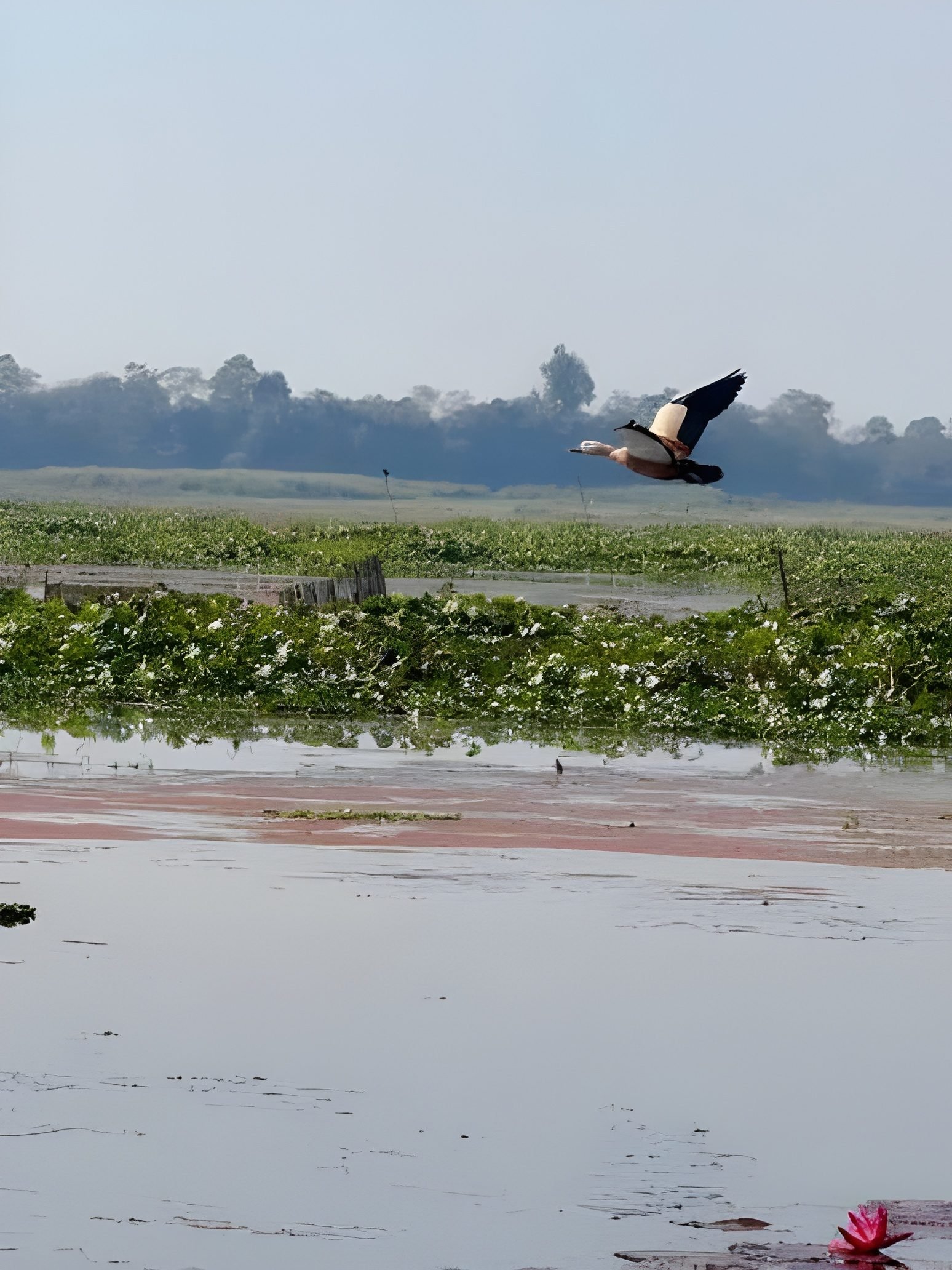
TINSUKIA, Nov 27: A study published in 2026 recorded 26 bird species in and around the Maguri-Motapung wetland landscape, indicating signs of recovery six years after the May 2020 Baghjan oil well blowout.
Researchers Kritticka Gogoi and Parthankar Choudhury of Assam University, Silchar, conducted the survey in June 2022 across the wetland, adjoining grasslands, paddy fields and the Baghjan area. Their findings were published on November 21, 2026.
The species recorded included Lesser Whistling-Duck, Indian Spot-billed Duck, Pheasant-tailed Jacana, White-breasted Waterhen, Pond Heron, Little Egret, Crimson Sunbird, Black Drongo, Oriental Magpie-Robin and Blue-throated Barbet.
The researchers said the monsoon survey largely recorded resident birds. They said the wider wetland receives nearly 500 species of resident and migratory birds during winter.
Another 2026 study, based on a survey of 150 households in Maguri Motapung village, found a strong link between community-led tourism and improved household incomes. Families from Moran, Motok, Koch, Ahom and tea-tribe communities depend on fishing and farming, while boat rides, homestays, eateries and guiding services have created work for young people.
The studies also flagged illegal fine-mesh nets and chemicals used for fishing, runoff from oil operations, poor sewage disposal, unplanned construction, siltation, riverbank erosion and invasive water weeds as threats to the wetland.
They said community-managed tourism, waste management and action against illegal fishing were needed to protect the beel and sustain local livelihoods.