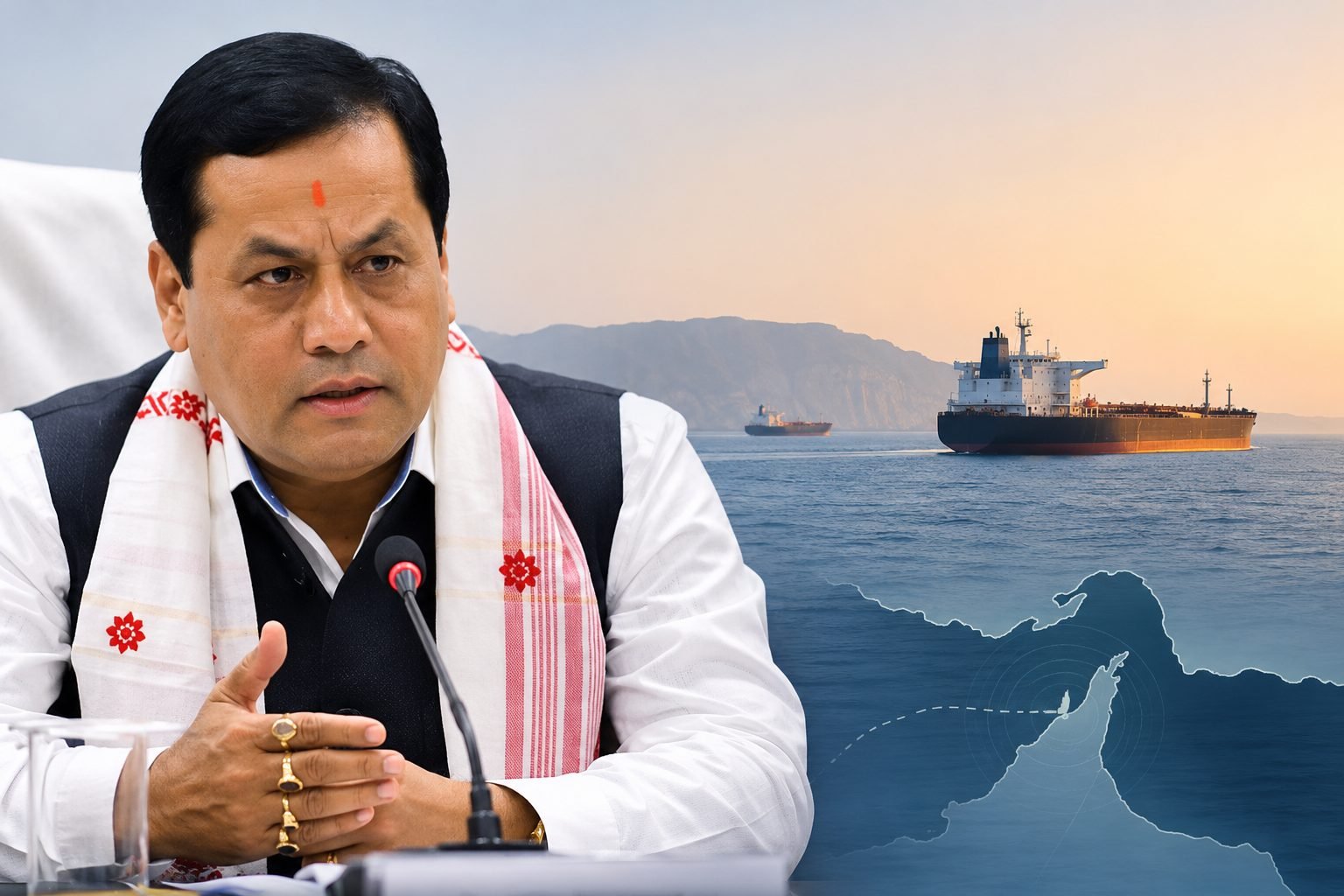
NEW DELHI: Union Minister of Ports, Shipping and Waterways Sarbananda Sonowal on Thursday condemned repeated attacks on commercial vessels, particularly those involving Indian seafarers, and reviewed maritime safety arrangements in the Persian Gulf region. The ministry was tracking nine India-flagged or Indian-interest vessels west of the Strait of Hormuz.
Sonowal directed the Directorate General of Maritime Administration and other concerned officers to strengthen safety and security measures in high-risk waters. He also called for closer coordination with government agencies, shipping companies, vessel operators and international bodies.
At a glance
- The ministry was tracking nine India-flagged or Indian-interest vessels west of the Strait of Hormuz.
- India-flagged vessels or ships carrying cargo bound for India had made 86 transits through the strait.
- The E-Navik tracking module was monitoring more than 800 vessels in the Persian Gulf and over 200 in the Gulf of Oman.
- Sonowal sought a personal briefing on compensation for victims and assistance for their next of kin.
What happened
Sonowal reviewed the situation amid attacks on commercial vessels in different parts of the world. He asked authorities to enhance monitoring of developments in areas considered high-risk and circulate security advisories promptly.
He directed officials to maintain regular communication with shipping companies and vessel operators. The minister also called for greater awareness among Indian seafarers about potential threats and the precautions they should take.
The ministry's E-Navik seafarer tracking module was monitoring vessel movements on both sides of the Strait of Hormuz. It tracked more than 800 vessels in the Persian Gulf, west of the strait, and more than 200 vessels in the Gulf of Oman, east of it.
Sonowal asked the authorities to coordinate closely with the Ministry of External Affairs, Indian diplomatic missions, maritime stakeholders and relevant international agencies. The coordination was aimed at ensuring prompt assistance and an effective response if an incident involved an India-flagged vessel or an Indian seafarer.
Who said what
“We strongly condemn the repeated attacks on commercial vessels, particularly those involving Indian seafarers, in various parts of the world,” Sonowal said.
He said such incidents posed a serious threat to the safety and security of seafarers, disrupted maritime trade and undermined the stability of global supply chains.
The minister said freedom of navigation and the unimpeded movement of merchant vessels through international waters were fundamental principles of international maritime law.
“Ensuring safe and secure sea lanes is essential not only for the continuity of global trade but also for sustaining economic growth, energy security and the prosperity of nations,” he said.
Sonowal said the strengthened safety plan would include enhanced monitoring in high-risk areas, timely dissemination of security advisories, regular contact with operators and greater awareness among Indian seafarers about threats and precautionary measures.
Background
The Strait of Hormuz links the Persian Gulf with the Gulf of Oman. The ministry was monitoring Indian-linked shipping activity in the waters west and east of the strait through its E-Navik seafarer tracking module.
The review focused on the safety of Indian seafarers and vessels. It covered India-flagged ships, vessels of Indian interest and ships carrying cargo meant for India.
Why it matters for Assam and the Northeast
Sonowal, who represents Assam in the Union Cabinet, said safe sea lanes were vital for global trade, economic growth and energy security. Disruptions to shipping routes can affect the movement of cargo and supplies bound for India.
The minister's review underlined the government's focus on the safety of Indian seafarers serving on commercial vessels in international waters and on arrangements to assist them in an emergency.
What next
Sonowal directed the Director General of Shipping to brief him personally on the status of compensation for victims of such incidents. He also sought details of measures being taken to ensure timely assistance to victims' next of kin.
Authorities were asked to strengthen monitoring, issue advisories in time and maintain coordination with diplomatic missions, maritime stakeholders and international agencies.