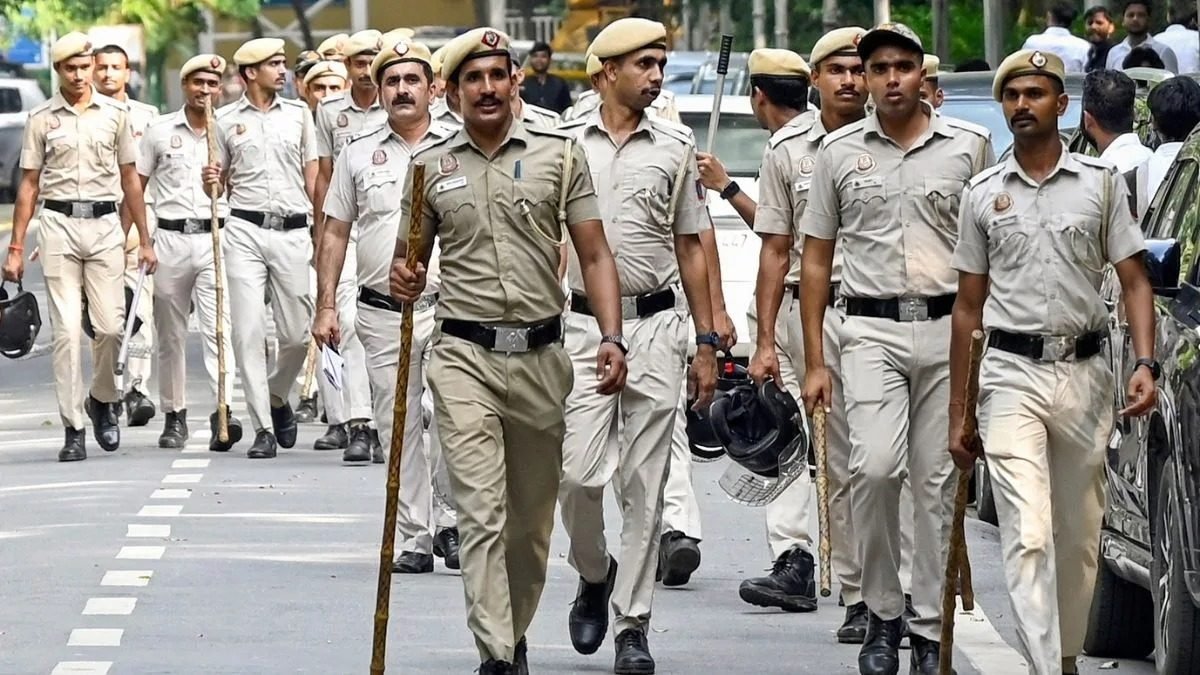
NEW DELHI, Nov 18: Delhi Police told the Supreme Court that there was no legal requirement for only women police personnel to handle women protesters during crowd-control operations.
In an affidavit, the police said provisions requiring the presence of women personnel while searching or arresting women did not apply in the same manner to crowd-control operations. The submission came after allegations that male police personnel had misbehaved with women protesters and women journalists during a protest seeking Chief Election Commissioner Gyanesh Kumar's resignation.
The Network of Women in Media, India, along with the Delhi Union of Journalists, Free Speech Collective and Kerala Union of Working Journalists, had moved the Supreme Court. Advocate Aarthi Rajan appeared for the petitioners.
Delhi Police said the deployment of women personnel at protest sites depended on the situation. It said decisions were taken after considering the need to maintain decency, avoid unnecessary confrontation and defuse tension.
The police said the presence or intervention of male personnel during crowd control could not be treated as misconduct solely on that ground. In emergencies, male personnel could act as first responders and assist women personnel, it said.
The affidavit also referred to the Supreme Court's October 11 direction that journalists, advocates and other professionals should not be obstructed from performing their duties during protests. Delhi Police said the direction did not apply to reel makers, social media influencers or people who disobeyed lawful police orders at prohibited gatherings.
The police said it respected the role of the media but some people carrying cameras and microphones at protest sites identified themselves as journalists. It said reel makers and content creators were not recognised as working journalists under existing laws, and distinguishing between journalists and reel makers had become difficult.
Delhi Police said its operation aimed to remove protesters from the site and restore law and order. It told the court that it had no intention of obstructing journalists from performing their professional duties.