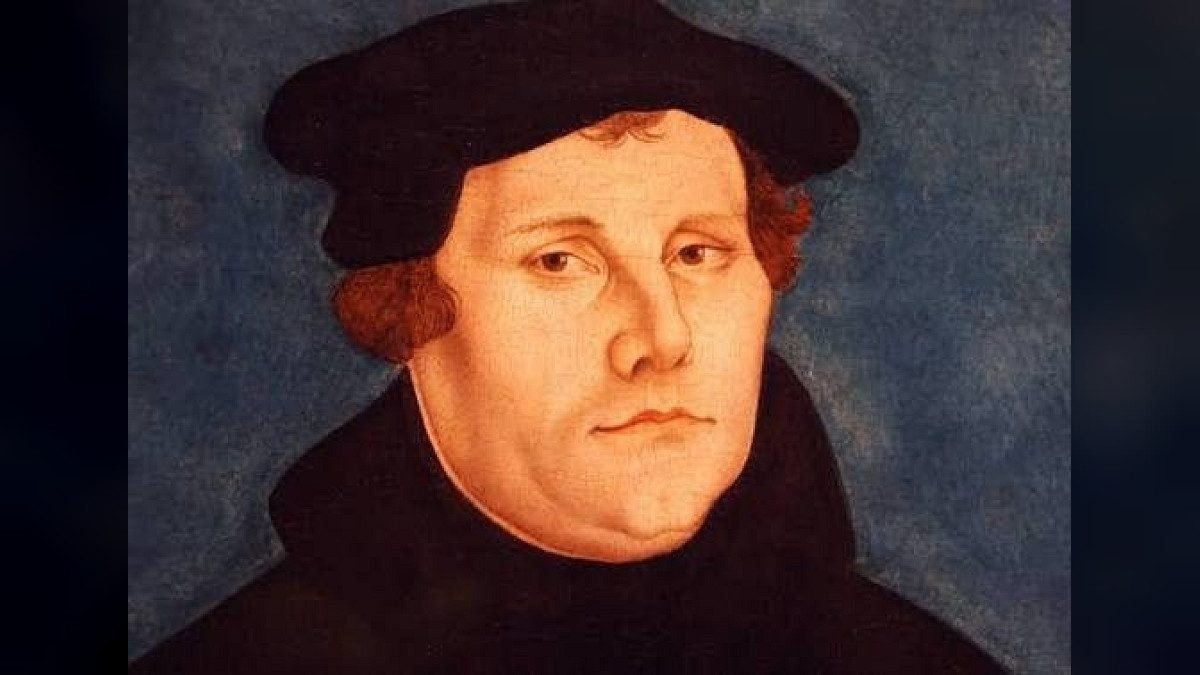
Martin Luther, whose challenge to established Roman Catholic Church practices sparked the Protestant Reformation, was born in Eisleben, Germany, on November 10, 1483.
Luther initially studied law, as his father wanted him to become a lawyer. In 1505, after being caught in a severe storm and fearing death, he vowed to adopt a religious life. He gave up his law studies and became a monk.
He later worked as a professor of theology and devoted himself to studying the Bible.
Challenge to church practices
In 16th-century Europe, Luther opposed a Roman Catholic Church practice under which people could pay to reduce punishment for sins. He maintained that money could not secure freedom from sin and that genuine repentance and faith in God were central to religious life.
On October 31, 1517, he published a document containing 95 questions and arguments, later known as the 95 Theses. According to the commonly accepted account, he posted the document on the door of a church in Wittenberg, Germany.
The move triggered widespread debate across Europe and came to be regarded as one of the beginnings of the Protestant Reformation.
Refusal to withdraw views
His conflict with the Roman Catholic Church intensified. At an assembly in Worms in 1521, Luther was asked to withdraw his views, but he refused.
He was subsequently declared a heretic. He continued his work with protection from his supporters.
Luther also translated the Bible into German to make religious texts easier for ordinary people to understand. The translation played an important role in the development of the German language.
In 1525, he married Katharina von Bora, a former nun. They had six children.
Luther died in his birthplace, Eisleben, on February 18, 1546, at the age of 62. His movement later contributed to the growth of Lutheranism and other Protestant religious branches.