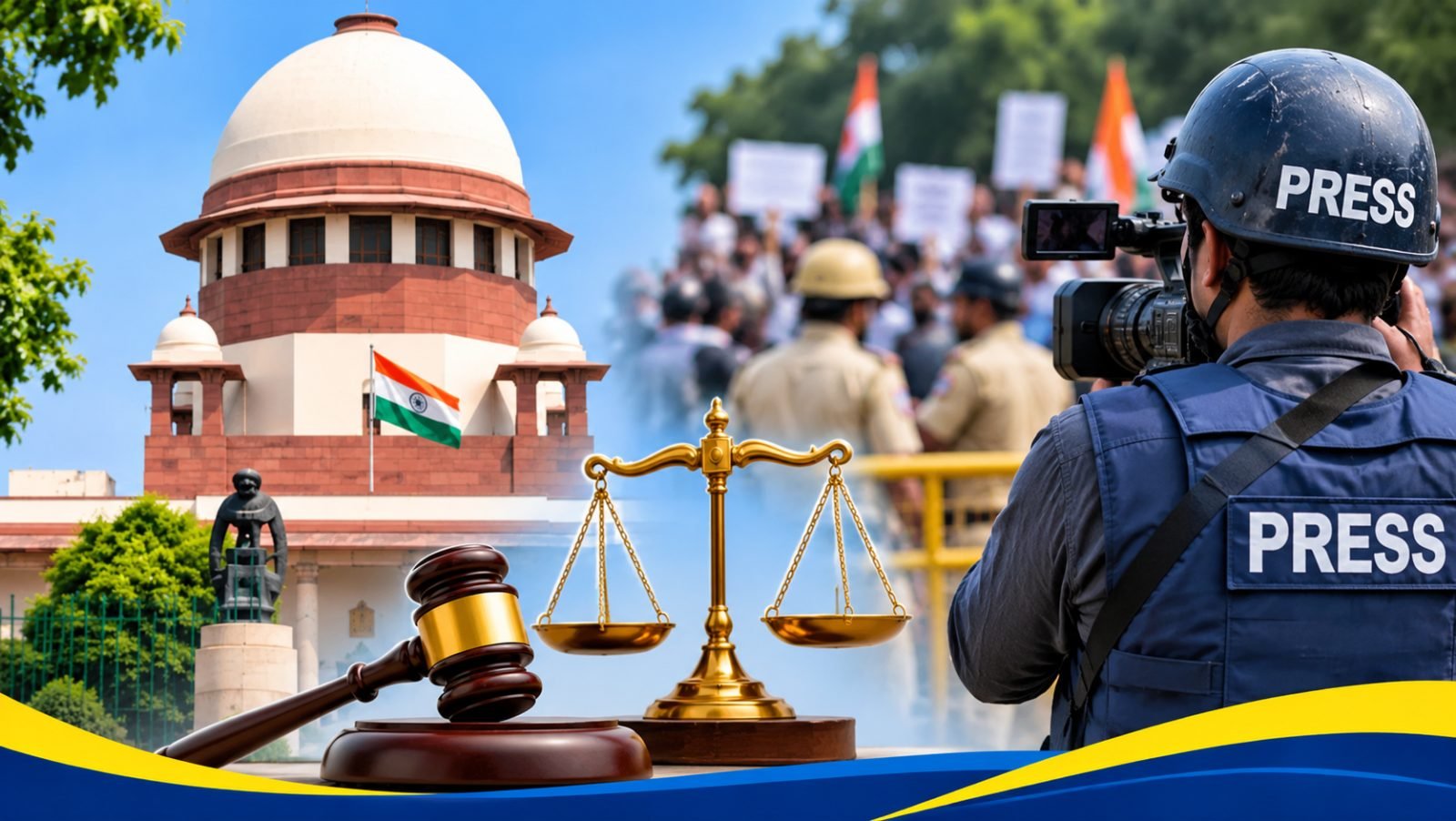
NEW DELHI, Nov 26: The Supreme Court on Thursday said it would examine the safety of journalists covering protests and their right to discharge professional duties, including whether recognised and self-declared journalists should receive different legal protection.
A bench comprising Chief Justice Surya Kant and Justices Joymalya Bagchi and V Mohan referred complaints of assault, misconduct and illegal detention of seven journalists while covering a protest in Delhi to a high-level inquiry committee headed by retired Supreme Court judge R Subhash Reddy.
The bench asked the petitioners to submit relevant evidence before the committee. It said the committee would examine whether the journalists were present at the protest site, whether police used force against them and whether such force was excessive.
The Kerala Union of Working Journalists and the Delhi Union of Journalists had moved the court over alleged police action against journalists during protests in Delhi on October 10 and 11, 2026, demanding the resignation of Chief Election Commissioner Gyanesh Kumar.
Senior advocate P V Dinesh, appearing for the petitioners, said the seven journalists were associated with established news organisations and were not persons making videos or reels for social media. He raised the question of whether journalists from recognised news organisations could be detained while gathering news.
The petitions alleged that journalists were forcibly removed from the reporting site, prevented from recording visuals and subjected to physical force. They also alleged an attempt to snatch a photographer's camera and the assault of a woman journalist while she was reporting live.
The court will also examine journalists' freedom of movement, their right to perform professional duties and whether forcibly removing them from a protest site amounted to detention. Delhi Police had earlier argued in an affidavit that social media influencers and reel-makers could not be given the same protection as journalists, saying there was a distinction between media journalists and those making videos for commercial purposes.