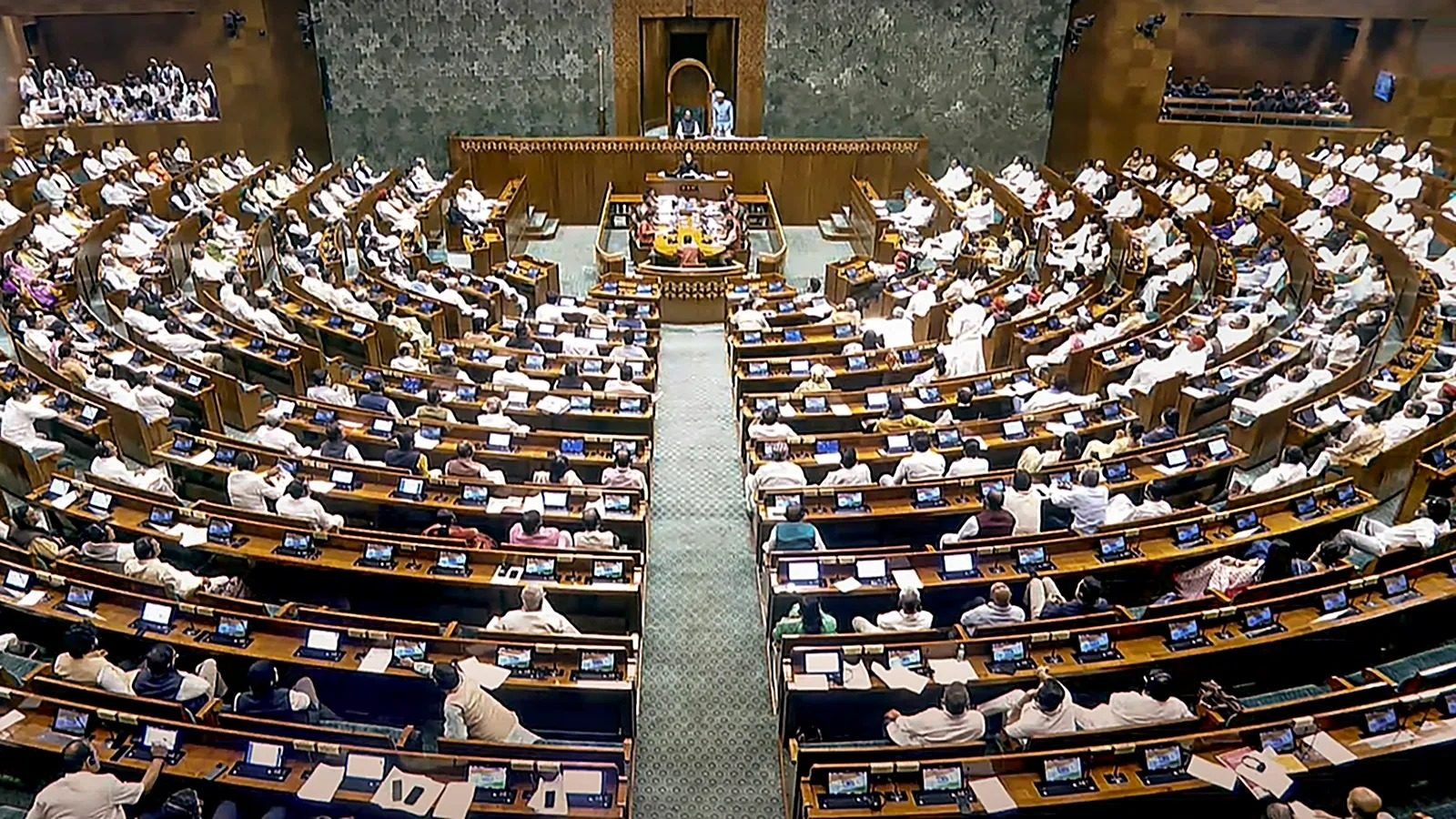
New Delhi: Parliament’s Monsoon Session has remained formally unprorogued for a record 88 days, surpassing the previous record of 87 days set in 2008.
Both the Lok Sabha and the Rajya Sabha were adjourned sine die on August 13. However, as of Monday morning, November 9, neither House had been formally prorogued by the President.
The delay in formally ending the session has kept open the possibility of reconvening Parliament under the same session at short notice.
Women’s Reservation Bill in focus
The government’s decision to keep the Monsoon Session unprorogued has triggered speculation about a possible extended sitting to consider a proposed constitutional amendment linked to the implementation of the Women’s Reservation Bill.
The proposal seeks to increase the strength of the Lok Sabha from the present 543 seats to a maximum of 850 through delimitation.
An extended sitting within the existing session requires a minimum notice of two days. In contrast, convening a fresh session requires at least 14 days’ notice.
The issue assumes significance as a similar Constitution Amendment Bill failed to secure the required numbers in the Lok Sabha during a special sitting of the Budget Session on April 17.
Difference between adjournment and prorogation
Adjournment sine die means that a House has been adjourned indefinitely by its presiding officer. Prorogation, on the other hand, is the formal termination of a session by the President.
The Constitution does not prescribe a specific time limit within which a House must be prorogued after being adjourned sine die.
Previous records
Parliament had remained unprorogued for 87 days in 2008, 76 days in 1987, 54 days in 1989, 49 days each in 2006 and 2013, and 41 days in 1963.
In 2008, the Lok Sabha met on July 21 and 22 to discuss a no-confidence motion against the then UPA government. The House was subsequently reconvened on October 17 and adjourned on October 24, with another sitting scheduled for December 10.
The report notes that keeping a session unprorogued for an extended period does not, by itself, amount to any constitutional or procedural impropriety.