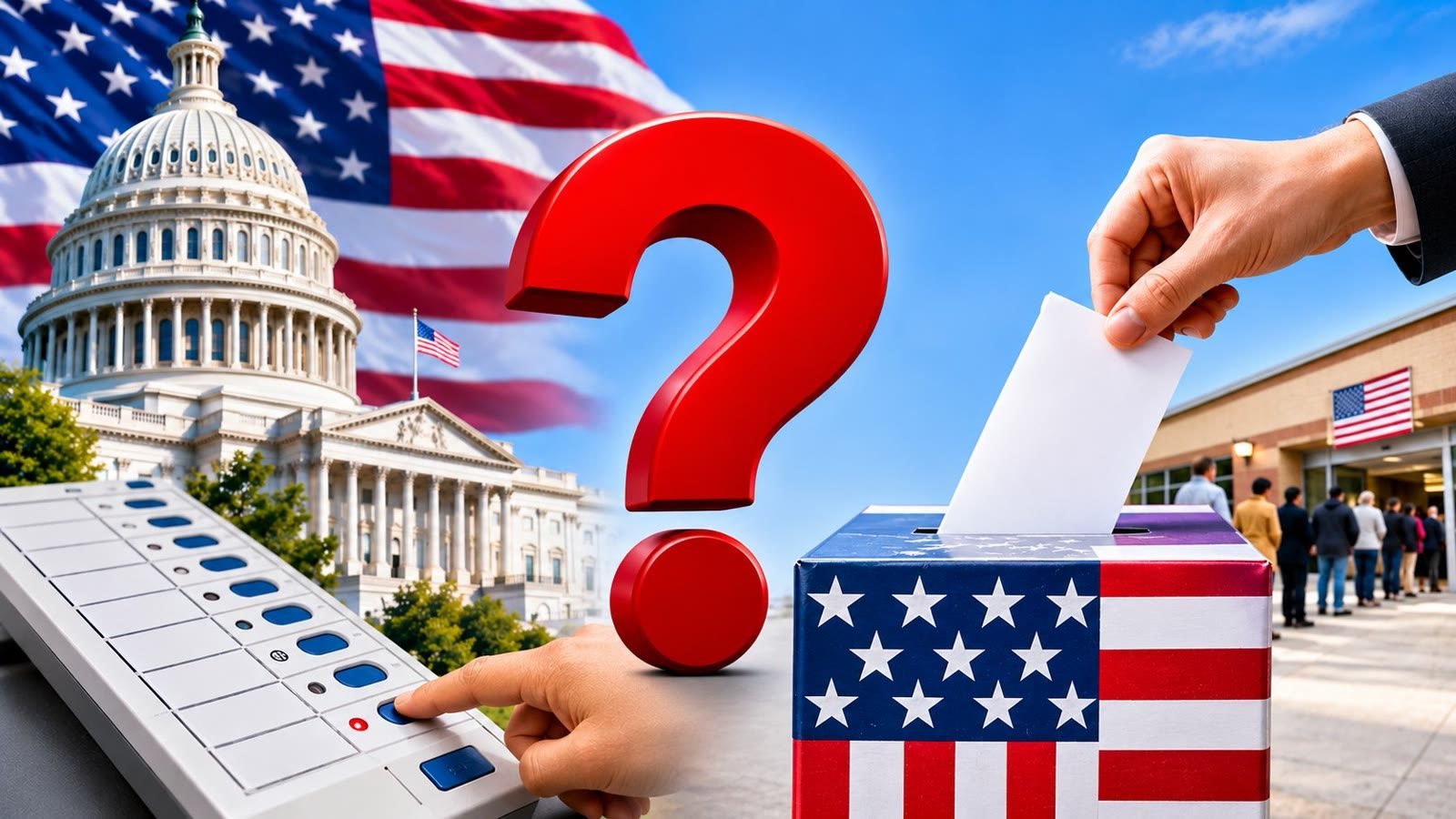
The United States is among the world’s most technologically advanced countries, yet paper ballots continue to play an important role in its elections. Unlike India, where Electronic Voting Machines (EVMs) and Voter Verifiable Paper Audit Trail (VVPAT) systems are used nationwide, the US follows different voting methods depending on the state and local election authorities.
There is no single voting system used across the entire country. Some states rely primarily on paper ballots, while others use electronic voting machines or a combination of both. Mail-in voting and early voting are also important parts of the American electoral process.
Paper ballots or EVMs: What does the US use?
In many parts of the US, voters mark their choices on paper ballots. These ballots are then placed in ballot boxes or scanned by machines for counting. The paper record can be preserved for recounts and audits if questions arise about the results.
Some jurisdictions use Direct Recording Electronic (DRE) voting machines. Voters select candidates on an electronic screen, and their choices are stored digitally. Certain systems also generate a paper record to support verification and auditing.
Therefore, it would be inaccurate to describe the American election system as entirely paper-based or entirely electronic. The method varies from state to state and, in some cases, from one local jurisdiction to another.
How does voting take place in the US?
1. Voter registration
In most states, eligible citizens must register before voting. Generally, a voter must be a US citizen, at least 18 years old on Election Day and meet the residency requirements of the state. North Dakota is the exception, as it does not require voter registration.
2. Voting at polling stations
On Election Day, voters visit their designated polling stations. Election officials check their names against voter registration records. Identification requirements differ from state to state. Some states require photo identification, while others accept alternative forms of verification.
3. Casting a ballot
Where paper ballots are used, voters mark their preferred candidates and submit the ballot. In many places, the ballot is scanned by a machine for counting.
At electronic voting stations, voters select candidates on a screen. The machine records their choices digitally, and some systems also produce a paper record.
4. Early voting and mail-in ballots
Americans do not necessarily have to wait until Election Day to vote. Many states allow early in-person voting. Voters can also cast their ballots by mail, subject to the rules of their state.
Mail-in ballots are checked by election officials. Depending on state rules, officials may verify signatures and other details before accepting a ballot for counting.
How are votes counted?
After polling stations close, ballots and electronic voting records are processed by local election authorities. Paper ballots are counted manually or scanned by machines, depending on the system in use. Electronic votes are tabulated using the records stored in the voting machines.
Initial results are often reported on election night. However, these figures are not necessarily final. Mail-in ballots, early votes and ballots from overseas or military voters may take additional time to process.
Election officials then conduct a process known as canvassing. They reconcile the number of ballots cast with voter records and review the results for discrepancies. Audits and recounts may also take place under state laws. The results are formally certified only after the required procedures are completed.
Why are the US Midterm Elections important?
Midterm elections take place halfway through a president’s four-year term. They determine the balance of power in the US Congress, which has two chambers: the House of Representatives and the Senate.
All 435 seats in the House of Representatives are contested every two years. Senate elections are staggered, with roughly one-third of the 100 seats contested every two years. Senators serve six-year terms.
In the November 3, 2026, midterm elections, voters cast ballots for all 435 House seats and 35 Senate seats, including special elections. Several state and local offices were also on the ballot.
What do the latest results show?
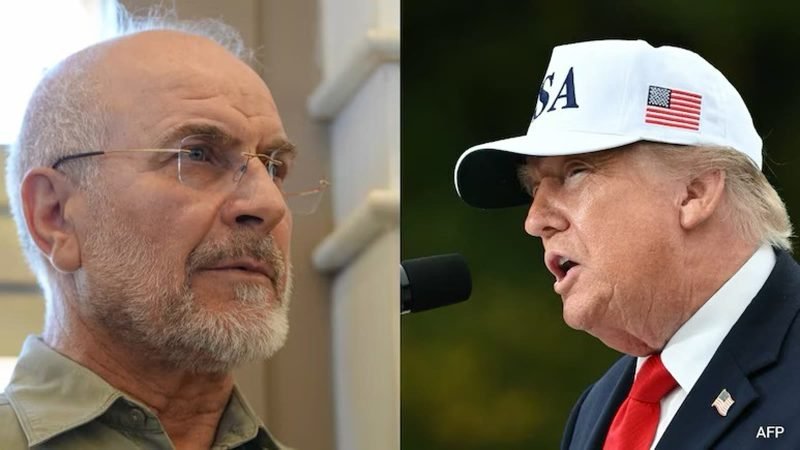
According to the Associated Press’s November 4 update, Democrats have won control of both chambers of Congress, defeating the Republican Party of President Donald Trump. The result marks a major political setback for Trump and his party.
Democrats made significant gains in key Senate contests, flipping Republican-held seats in states including Kansas, Iowa, Texas, Ohio, Maine, North Carolina and South Carolina. They also gained more than two dozen seats in the House of Representatives, according to AP’s reporting.
The outcome is expected to make Trump’s remaining two years in office more politically challenging. With Democrats controlling both chambers, they will have greater power to block legislation, scrutinise the administration and influence the approval of government nominees.
Voters’ concerns over the cost of living, the Iran war and government corruption were among the issues highlighted in election-night reporting and voter surveys.
India’s EVM system and the US voting process: Key differences
India uses EVMs and VVPATs under the supervision of the Election Commission of India. The US, however, does not have one uniform nationwide voting system. State and local authorities administer elections, using paper ballots, electronic machines, early voting and mail-in ballots in different combinations.
In India, voters cast their votes electronically, while VVPAT provides a paper verification slip. In many parts of the US, voters directly mark paper ballots, which are then scanned and counted. These paper records can be used for audits and recounts.